Saturday, June 4, 2022

Frikkie and Plug Join the Army

When Frikkie and Plug were in Matric the SANDF visited their school on a recruitment drive. After listening to the presentation they both decided it would be a good idea to join the Army for a year.

Frikkie was attracted by the prospect of being paid a salary while being trained to use explosives and weapons to kill people. Plug’s motive was entirely different, his decision being prompted by a recent experience in the local Post Office.

The only thing that Plug liked about standing in queues was that you could often pick up some real gems of human wisdom that might prove to be of value at a later date. He had been waiting to collect a parcel and overheard an old guy with a limp lying about his heroic deeds in Angola. “I was a Major general, you know,” he said. “I was always at the front, in the thick of it, you know. That’s how I got wounded. Should have been a bloody Quartermaster! A Quartermaster rarely sees battle, you know. Plenty of opportunity for self-advancement, you know.”

Intrigued, Plug had gone home and done some research. A Quartermaster was in charge of supplies, the procurement and distribution thereof. Well, that made sense. What the old guy had meant by self-advancement was actually self-enrichment. And that was why Plug decided on a military career for a year.

Just before the initial medical examination where they had to strip naked, piss in a bottle, have their testicles weighed, and bend over for the rectal probe, Plug overdosed himself with a medication that induced symptoms of tachycardia. The veterinary assistant who was masquerading as a military doctor felt Plug’s pulse and said, “Fok!” He listened with his stethoscope and again said, “Fok!” He called to a hospital porter posing as a military doctor who was busy peering up a young recruit’s asshole. When he came over and took Plug’s pulse he too said, “Fok!” And it was little surprise that when he listened with the stethoscope he exclaimed, “Fok!”

All went according to plan and Plug was ordered to report to the Quartermaster, under whose command he was to serve as a storeman.

He soon worked out ways to add his own percentage to the profit from the procurement and distribution of supplies being made by the Quartermaster and his Sergeant. After his 12-month stint Plug went home well rested. He had dined better than a senior officer. He had passed from military camp to civilian fleshpots without let or hindrance. And at the bottom of his kit bag was a large biscuit tin stuffed full with wads of banknotes.

Frikkie’s experience was different. The Army offered him a legitimate excuse to vent his pent-up frustration, hatred and self-loathing. He enjoyed the initial training with maniacal enthusiasm and soon demonstrated to his officers that he was ready for battle and eager to see some action. His brute strength, his natural athleticism and his thirst for blood did not go unrecognized, and he was soon drafted into the elite unit of pathological thugs known as Peace Keepers. Off to the DRC he was sent.

In the DRC he received a rude awakening. He soon learned, to his extreme chagrin, that the enemy was at least as good at fighting in the bush as he was. This resulted in him living for seven months of his life with the conviction that each day was bound to be his last. Admittedly he did manage to kill quite a few people, both in battle and on reprisal raids against civilians. And he participated in the gang rape of a woman, her subsequent disembowelment, and the torching of her village. He tortured prisoners before they died of their wounds or were executed. On one occasion he was making his way through the jungle, R5 at the ready, expecting at any moment to step on a landmine, or be shot in the back. There was some rustling in the tall grass at the base of a tree. He fired a burst into the grass before throwing himself flat. He lay motionless, listening. Finally he got to his feet and went to investigate. The bodies of two boys, about 5 or 6 years old, lay lifeless where they had been cowering. How was he to have known?

Yes, he saw a lot of action and he survived it. But it was to be many years before he stopped throwing himself to the ground whenever a car backfired in his proximity. And he was never able to entirely erase the sound of the woman’s screams, or the sight of the two boys.


This chapter is taken from Frikkie and Plug, which is available on Smashwords.


Saturday, May 21, 2022

My Military Career


The Defence Amendment Bill, designed to make military service compulsory for White men, was passed on 9 June 1967. It meant that all White males between 17 and 65 were required to undergo military training in the Army, Navy or Air Force for nine months. I turned 17 five months later and in January 1968 I was issued with two train tickets, one from Fish Hoek station to Cape Town, and the other from Cape Town to Kimberley.

While the train travelled northward my anxiety increased as more young men climbed aboard. Many of them appeared so oafish as to be barely recognisable as human. I was standing in the corridor when a middle-aged gentleman tried to enter his compartment but recoiled in shock. He said that one of these brutes was fornicating with a schoolgirl who was partof a touring netball team.

On arrival in Kimberley the following day we were taken to the military base and addressed in Afrikaans by an officer. He warned us that this was not a holiday camp, and that we might be sissies and poeftes now, but the Army was going to make men of us. 

We were led to a hangar-like building that contained rows and rows of beds. I was allocated one of them and was told to change into a khaki overall, socks and boots. The rest of the day was spent learning to march. Links, regs; links, regs. Day two was dedicated to more marching interspersed with press-ups and star jumps, saluting, standing at attention and then at ease, and getting used to being shouted at.

On the third day we underwent the medical. In batches of 30, we were taken to a building, told to strip naked, handed a glass beaker and ordered to piss in it. Unlike other men who enjoy a sense of camaraderie in places like showers, change rooms and urinals, I have always found it difficult to urinate on demand, and especially in the presence of others. Accordingly, I asked another recruit ,who was holding a full glass, to share it with me, and he happily obliged. It turned out that there was nothing wrong with his specimen, and I then underwent an eye test, which I failed. I took my turn to be examined by one of two military doctors. He looked me up and down, inspected my genitals and listened to my lungs. When it came to my heart, he seemed to be taking his time. He told me to stand to one side and wait. Being somewhat self-conscious, I found the next ten minutes agonizingly embarrassing, and was relieved when the other medic came over and put his stethoscope to my chest., He, too, took his time, then nodded agreement to his colleague and I was dismissed.

On the morning of the fourth day, after roll call, a sergeant read out a list of the dozen or so recruits who had failed the medical and were permanently exempted. When I heard my name called, I was suffused with feelings of humiliation and joy, with the latter far outweighing the former. We were ordered to surrender our military kit, change into civvies and gather in a billet to await transport to the station. While lounging on the stoep of this building, a few of us derived some fun from calling out, ‘links, regs; links, regs’ as a squad of non-rejects came marching past. The corporal in charge screamed at us but we laughed derisively and made hand gestures, knowing that we were now untouchable.

I thought it a fitting end to my military career, and I enjoyed the ride home in an almost empty train. It gave me time to come to terms with the fact that I would not be required to kill any Communists or terrorists, and I would never experience what it is like to step on a land mine or be shot with an AK-47.

More than 40 years later I drew on this brief episode to write a chapter in my book about the escapades of Frikkie and Plug, which will appear in the next blog post.

To view my longer work as an author, you can find me on Smashwords here.

Monday, May 9, 2022

Memory Project: The .22 Pistol


During my childhood I saw my mother in tears on many occasions. Her distress stemmed from hardship and homesickness. Separated from her family by 6000 miles, in a foreign country on an outlandish continent she often felt lonely and deprived of both physical and emotional support. It was a struggle bringing up three young children on the meagre income my father could provide, and at times she would become tearful. It was always the same lament containing recrimination aimed at my father, and vitriol for the hostile environment and the horrible people she shared it with. Why had he forced her to leave family and friends and come to South Africa where she knew no one, and then, just as she was settling down, why had he insisted on dragging her and the children off to this godforsaken place?

It took her a good 20 years to shake off her homesickness and chronic nostalgia for London and the English way of life. I used to think my father had made a huge mistake in bringing her to Africa. Right up until after her death I held the notion that she just wasn’t the pioneering type. But in the last decade or so I have come to realise just how strong and adaptable she was. Considering her background and her gentle nature, it must have taken a great deal of bravery to endure some of the demands that were made on her.

One of the ordeals that she had to endure was being left alone with three young children for a week or two at a time while my father was away in the bush. Admittedly there was little crime in Gwelo in those days, but the fact that my father bought her a gun is an indication of how nervous she must have been at night.

The gun was a Beretta .22 pocket pistol. It was so small it looked like a toy, and the cartridges were tiny. When he brought it home, he showed her how it worked, and set up a tin drum against the kaia wall to shoot at. She fired a few shots but was clearly reluctant and apprehensive, and relieved when the exercise was over. She used to sleep with the loaded pistol under her pillow, but I doubt whether she would have been able to use it had there been an intruder.

After my father’s death My brother asked me if I was interested in taking over the gun, which was unregistered and therefore an illegal firearm. Foolishly, I declined and now regret it. It would have been a valuable memento and I know my son would be keen to try firing it. Maybe Alan still has it stashed away somewhere?


To view my longer work as an author, you can find me on Smashwords here.

Tuesday, May 3, 2022

Nursing Notes


Henry Fuckit (my alter ego) worked as an orderly at Groote Schuur Hospital in the late 1970s. When he applied for the position he was interviewed by Matron Sharp, who described in much detail the duties of a nurse and what would be expected of him as a nursing assistant. She also issued him with a warning.

“In order to cope with the emotionally and psychologically distressing aspects of caring for the sick a certain degree of objectivity and detachment must be maintained. This is natural and healthy. But there is the danger of losing empathy for the patient and falling into the trap of regarding the sick person as an object and not a real person. Once this happens it is easy to see the patient's behaviour as irritating, or disgusting, or pathetic, and deserving of contempt and ridicule. Should you reach this state of callous lack of compassion your own humanity will be in serious jeopardy.”


Henry’s final interview with Matron Sharp.

When he handed in his notice, the briefest of missives which started with the words 'I hereby', he had the distinct impression she had been expecting it. Her face betrayed no surprise, or any other emotion. But she took too long to read it.

'I would like to thank you…' He really shouldn't talk shit to this woman. This was a good woman. 'My three years is nearly up and I must move on. The long and winding road, you know. I've been keeping a record of my impressions.' From his breast pocket he produced a piece of foolscap folded in half and half again, and waved it in front of her. 'This is my eight-page notebook. I've filled a few of these; quite a few.' He returned it to his pocket. 'I have written them up neatly in an exercise book, something like keeping a diary. I wondered if you'd care to look at it - some of it's quite amusing. You could browse through it, look for bits that appeal to you. You might find it interesting, see the hospital through the eyes of an orderly. Of course, I'm no Samuel Pepys or James Boswell. Just bits and pieces I've jotted down during quiet moments in the ward. Thirty escritoires to choose from. I've conducted many an interview from the overbed table parked at the foot of the bed. Did you know Hemingway preferred to write standing up? I suppose it could be considered a trifle unethical; a violation of privacy, trust; contravening the Florence Nightingale Pledge, especially the bit about holding in confidence all personal matters committed to my keeping. A bit rough, too. You might find some of the details just too explicit, the verbatim reportage embarrassingly exact. Just turn the pages, skim through it and pick out anything that catches your interest. You might find it tiresome, pointless, depressing. Like reading a Samuel Beckett novel, drivelling on about nothing in particular except that it's all rather desperately funny and wrist-slittingly nihilistic. Feel free to slam it shut and push it aside with a grimace of disgust. I'll fully understand if…'

'Mr Fuckit. I would like to read it. Thank you.'


The ebook is available from Amazon and Smashwords.


Tuesday, April 19, 2022

Memory Project: W Martin Contractor

What prompted my father to move to Southern Rhodesia in 1956 was the news that good money was to be made from carting gravel for the construction of the country’s expanding road network. He went ahead on his own and my mother followed a few months later with us children. He probably chose Gwelo for its central geographical position.

He worked for about a year before acquiring a 5-ton Bedford tip truck and going into the transport business. He drove the truck and, being a mechanic, did his own maintenance and repairs. He called himself W Martin Contractor and my mother kept the books. I still have her Cash Book, Ledger, Journal and Analysis, and it appears that the business lasted from April 1957 to October 1959. In those two and a half years he was away from home much of the time, spending a week to two weeks in the bush before coming back for a weekend.

He must have done quite well at first, because he bought a second truck and employed a native driver. However, he had joined the gold rush a little late and by 1959 most of the roads had been built. When the work dried up he sold his trucks and took a job at Afrox before moving to the CMED, where he worked on Gwelo Municipality’s trucks and earth moving equipment. Then he tried going it alone once more.

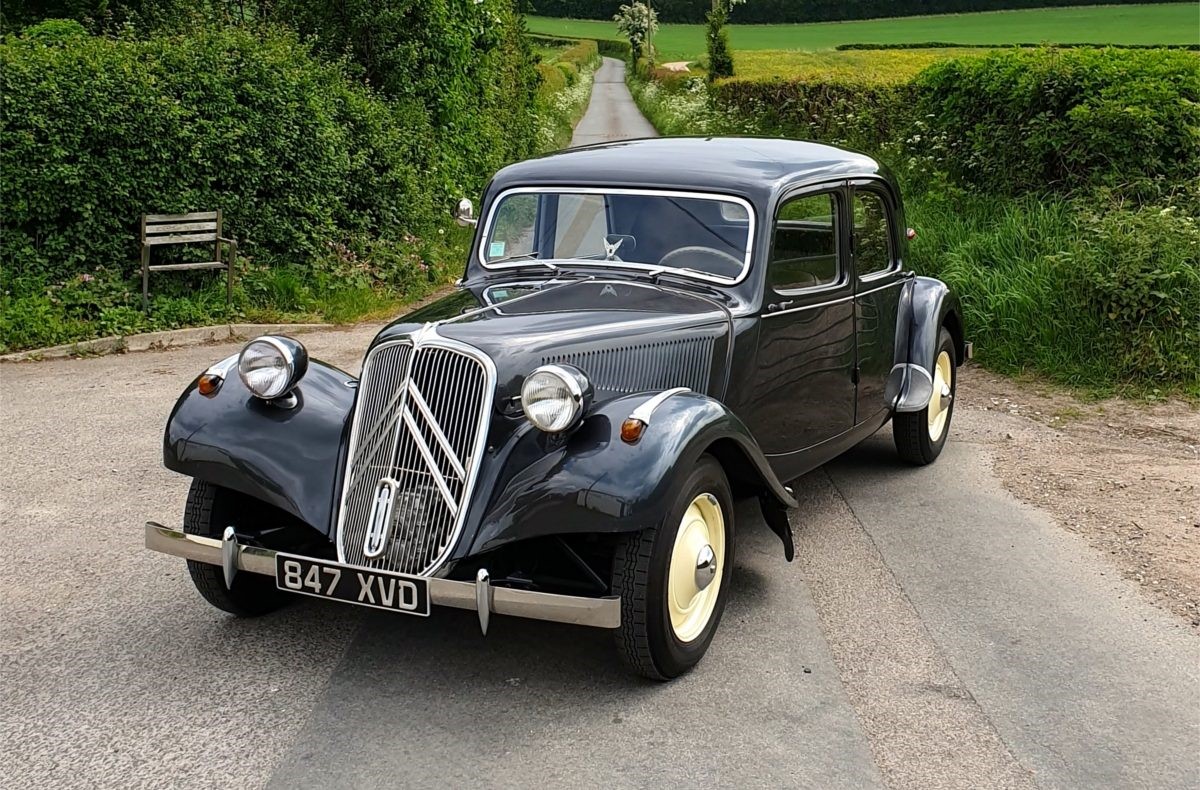
This enterprise involved buying second hand cars, doing them up and selling them at a suitable profit. I can remember one type of car that he overhauled and refurbished, there having been three of them. It was the Citroen 11 CV, a stylish and sporty looking car with a long bonnet, headlamps on stalks, running boards and a boot that was moulded to fit over the spare wheel. The bonnet was hinged down the middle and opened like a pair of wings, and the gear lever protruded from the dash and was moved in and out to change gear.


I sometimes helped him to bleed the brakes and clutch by getting behind the wheel and pumping the pedal until he called out from under the vehicle to hold it down while he released the trapped air.

This business did not flourish, and by the end of 1962 the future for whites in Rhodesia was looking increasingly uncertain. In 1963 my father packed his suitcase and boarded a train back to South Africa in search of work. He first went to East London and stayed with ex-Rhodesian friends, Ivan and Madge Kernick. Unable to find a decent job he served a short stint as a battery salesman and then headed for Cape Town.

To view my longer work as an author, you can find me on Smashwords here.

Tuesday, April 12, 2022

Beyond Redemption

The war in Ukraine has confirmed my belief that as members of the human race we will never be able to suppress our brutish tendencies and that civilization is merely a veneer that hides our true nature.


About a year ago I wrote a 30-page story entitled Vermin Control, in which The Creative Force decides to exterminate all of humanity by making them smaller and smaller until they are shrunk out of existence. Henry, the protagonist, meets the Creative Force, which reveals itself to him in the guise of Gudd and Sutton. He pleads with them to stop the process but fails to dissuade them.

In this extract they give their reasons for deciding to wipe our verminous species off the face of the earth.

“Instead of learning how to resolve conflict through peaceful means, humans concentrated on using science and technology to invent increasingly lethal military hardware. When the Second World War broke out it became clear to Gudd and I that the human brain was now hard wired to choose force above negotiation and compromise when in dispute with those perceived as the enemy. When you used Science to invent and produce the Atom bomb as the ultimate weapon of mass destruction we were forced to acknowledge that the species was set on a course leading to self-annihilation.”

“But after the horrors of the two wars we did try to reform,” Henry said without conviction. “Surely the establishment of the United Nations Organisation was a step in the right direction?”

“You know how ineffectual that enterprise has been. Since its establishment that organisation has been helpless in preventing the Cold War, the Arms Race, the Korean War, and the Vietnam War, as well as a long list of other deadly conflicts around the world that includes several genocides.”

“I think that’s enough about their predisposition to pick a quarrel and resort to violence. Cut to 1980.”

“Right. I know you can’t wait to hit him with 2020, Gudd.” Sutton swirled the ice in his glass and took another drink. “By 1980 the nations of the world were as far from being united as when the UN got going after the Second World War. Not only that; we were dismayed to see that utopian socialist ideas were being abandoned as a ruthless form of Capitalism took hold in the West and was spreading fast. It was clear to us that the Communist countries would soon succumb to the materialism and selfish individualism of the Western economic system. And all the while you were making great strides in Science towards the development of ever more lethal ways of killing one another.  We could not but conclude that as a species you were well on the way to a final conflagration terminating in your own demise. That’s why we decided to pull the plug and leave you to it.”

“I can’t honestly disagree with you and put up a defence. But what caused you to change your minds when you revisited us 40 years later? Why can’t you leave us alone to die out as a failed evolutionary experiment?”

Henry was looking at Gudd, who appeared more than willing to put this representative of Homo sapiens in the picture.

“When we left in 1980 it was with a sense of disappointment and betrayal that felt something like humiliation. On our return we were shocked at the degradation that has taken place over four decades. Disappointment turned to loathing and then rage.”

“Rage? I thought you said you had given up on us? Were you secretly hoping we might have been mending our ways?”

“Not at all. We knew you were incapable of intellectual and moral improvement, and even though you were further down the road of mental and spiritual decline, we weren’t all that surprised. What shocked us was what you were doing to the planet. We had hoped to find that war and disease had already begun to reduce your numbers. Instead, the population had proliferated from four and a half billion to nearly eight billion, and that was in spite of the almost certain probability the new additions would be born into miserable squalor. It was as if you had never heard of birth control. You had chosen to disregard the increasing burden being placed on a finite planet already struggling to sustain your insatiable needs. You continued to grow out of control like a metastasizing cancer.”

“A metastasizing cancer?” said Henry. “That’s an appropriate metaphor. I suppose what you are saying is that a cancer will continue to grow until it has killed its host?”

“That is how we see it, Henry. To save the host we are going to have to zap the cancer.”


The full story, which is set in Pearly Beach, is available as a Word document for free on request. Email blindoldtoppie at gmail. 

To view my longer work as an author, you can find me on Smashwords here.

Sunday, April 3, 2022

Down and Out


Half a century ago, at the age of 21, I travelled around the UK and Europe for a year. Because I arrived without any money, I had to take temporary menial jobs to finance my stay. I worked on building sites as a labourer, was a window cleaner for a while, and even spent time as a lavatory attendant in Amsterdam in order to pay my way from one place to another. At times I was obliged to live rough, like sleeping on railway benches or in cheap hostels frequented by individuals who were down on their luck.

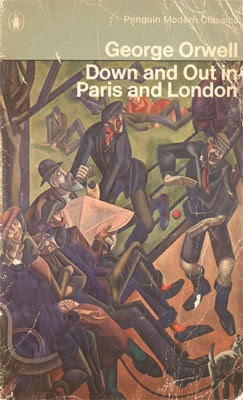
About a year after returning to South Africa, a fellow traveller sent me a book with this inscription in it: ‘Hello there. I wonder, doesn’t this strike a familiar note?’ The book was Down and Out in Paris and London by George Orwell and it did indeed resonate with memories of roughing it in Britain and on the Continent.

It is now fifty years later. A week ago I was sitting in my car outside Blue Bottle Liquors, when a man approached me. He looked exhausted and dehydrated, as if he had been wandering in the desert for a week without a hat. He said he wanted to buy a rooidoppie but was R5 short. Could I help?

As I handed over the coin, I asked him what a rooidoppie was. He said it was a plastic bottle of wine with a red screw top. When he emerged from the bottle store with his purchase I watched him make his way down the street to a narrow alley and he disappeared from sight.

It was then that I remembered the Orwell book and its depiction of Salvation Army refuges, squalid doss houses and grimy city streets. I tried to imagine the kind of life endured by the man I had just helped to buy a bottle of booze. What condition would I be in, I wondered, if I had fallen on hard times and was homeless? I concluded that by now I would most certainly be feeding the worms.


To view my longer work as an author, you can find me on Smashwords here.

Just Another Simulacrum

            (Image: Gemini.ai)   What has the plight of the rhinoceros got to do with Jean Baudrillard? You may well ask. Th...