Saturday, March 11, 2023

The Last Outpost


When I first started coming to Pearly Beach in the 1970s, access was on a gravel road that went through Baardskeerdersbos and then turned right and headed in an almost straight line for the sea. There was the Campsite, no more than thirty or forty houses and a concrete water tower. No electricity and no tarred roads. I was only in my mid-twenties but I had already formed a strong aversion to city life and thought that this place was sufficiently remote to be safe from development for a long time.

I later learned that in 1952 a piece of land adjacent to the Campsite, which had been popular  with surrounding farm communities as a holiday and fishing destination for several generations, was approved by the Surveyor General as the site for a new town. The area, including the Campsite, was part of the farm Klein Hagelkraal owned by Charlie van Breda.

Klein Hagelkraal was acquired by Jerry Puren in 1959. A builder and cabinet maker from Worcester, he settled in Pearly Beach and became the resident contractor, responsible for most of the early dwellings that were built over the next twenty-five years .

As the number of houses grew, the need for a more direct access to Pearly Beach became urgent. In 1973 the present bridge over the Uilenkraal River was built and work on a direct route to Pearly Beach commenced. Before this time the river had formed a natural barrier that could only be forded by swimming or wading across it at low tide. A wooden bridge suspended on ropes was built in the 50’s, but it could not support anything heavier than pedestrian traffic.

It was while the gravel road from the bridge to Pearly Beach was under construction that the Nationalist government intervened and directed that it be extended beyond its originally intended end point. Not only that, it was to be upgraded to the standard of a National Road. Although no official explanation for this apparently senseless deployment of resources was forthcoming, it was understood to be part of a secret military strategy. The road would be taken to the missile testing range at De Hoop, which was to play an important part in the apartheid regime’s plans to develop a nuclear arms capability. However, the project was halted in the late 1980’s, the road having reached ‘the middle of nowhere.’

To this day, nearly 40 years later, the R43 still comes to an abrupt halt at the same dead end where it stopped four decades ago. If a fatigued or inebriated driver fails to heed the warning signs and hazard bumps, he or she will crash headlong into the game fence that encloses Agulhas National Park. But those who manage to stop in time are obliged to turn around and retrace their steps without having reached anywhere of note. And if they are reluctant to do that, they could turn sharp left onto a corrugated gravel road that will eventually take them to Bredasdorp, if their car does not shake to pieces before they get there.

One other option is to turn right and head for the sea, which lies just a couple of kilometres down a dirt road. Situated in the lee of a Milkwood-clad dune is the caravan and camping site known as Die Dam. There is also a collection of modest holiday chalets, some of which are now permanently occupied. The road runs along the rocky seafront and ends at the last fisherman’s cottage. Beyond that there is a sandy 4x4 track through Strandveld vegetation to Quoin Point, but it is not open to the public.

In recent times I have come to think of Die Dam as the last outpost, at the end of the line and furthest from civilization. I used to consider Pearly Beach safe from the development that would destroy the atmosphere of a remote seaside settlement where it was still possible to live in harmony with nature. However, in the past three years there has been an influx of people to the area that has brought about a feeling of encroaching suburbia. New houses are being built all over the town, indigenous vegetation is being eradicated and replaced with roll-on lawns, bright lights pollute the night sky, dogs bark incessantly and traffic rumbles through the streets. In addition, many of the new arrivals display the arrogant attitude of colonisers intent on civilizing a primitive backwater.

To escape this onslaught, I suppose I could sell up and move to the last outpost, but at this late stage it is not really an option, considering the upheaval it would entail. Instead, I will have to stop bemoaning these unwelcome changes and try to enjoy what remains of a once idyllic place to live.

To view my longer work as an author, you can find me on Smashwords here.

Wednesday, March 1, 2023

One Thing Leads to Another

On a hot day in February 2019, I consulted a dermatologist in Hermanus. A thin woman in her fifties, she wore a strapless dress that was so flimsy and loose-fitting it occurred to me she might be wearing a nightie. I asked her to take a look at some skin blemishes. She said the one on my cheek next to the left ear lobe appeared suspicious and should be investigated. A few days later she phoned to say that the biopsy had revealed the presence of a squamous cell carcinoma, which could be surgically removed by a plastic surgeon colleague of hers. He was 80 years old but, she assured me, his eyesight was still keen and his hands were as steady as a 70-year-old’s.

The procedure took place at the Hermanus Mediclinic, where, in 2016, I had undergone two separate operations on my cancerous prostate gland. (See The Lead Cylinder and thePlastic Urine Sieve.) Although this facial surgery was of a minor nature, it also had to be done under general anaesthesia and I again experienced the sudden and total loss of consciousness that had surprised and delighted me twice before. This time, however, the anaesthetist must have brought me round prematurely, because I was aware of the surgeon still swabbing the side of my face. I was also filled with a vague sense of embarrassment, suspecting that I had been talking a lot of confused nonsense as I returned to consciousness.

Back in the ward, my doctor called in to express his satisfaction with his scalpel work, having successfully avoided severing any facial nerves. He also assured me that he had ‘got it all out.’ I went home in the afternoon, thinking that the man must know what he was talking about and there was no reason to doubt him, even if he was in his eighties.

More than three years later, after surviving the Great Pandemic of 2020/21, I became aware of a swelling on my lower abdomen. On finding that it disappeared into my groin when I lay down, I concluded that it was probably a hernia. How the fuck had I ended up with a hernia? I had not been aware of any recent activity that had involved violent exertion sufficient for me to bust a gut. There had been no tell-tale sharp pain or the sound of abdominal wall ripping open.

Searching for a possible explanation, I looked back over the events of recent weeks and came up with three prime suspects. Firstly, I had spent two weeks coughing and sneezing with a heavy cold. Maybe I had strained myself then? What about the storm that brought down the big rooikrans? (Link) I might have overdone it chopping up those heavy logs. Finally, there was the anniversary lunch. Lifting that No 4 pot out of the fireplace required more effort than was good for me? Or maybe it was a combination of factors that had caused the rupture.

At the beginning of August 2022, I saw my GP in Gansbaai. When I exposed my pubic area to her she immediately diagnosed a right side inguinal hernia and wrote a letter of referral to Dr S, a general surgeon in Hermanus. I also asked her about a lump on my neck just below the left ear lobe. She said it could be an infected lymph node, which Dr Esse would be in a better position to investigate. An appointment was made and K took me in five days later.

Of average height, Dr Esse was a thick-set man in his mid-forties. He had a superficially jovial manner and did not seem to be in a hurry. Having asked me some standard questions concerning my medical history, he got me to lie on the examination bench and began prodding my groin. No doubt about it: a right-side inguinal hernia. He could cut me open and repair the tear with some surgical mesh if I gave my consent. I said that would be in order, and asked him to look at the facial lump. He palpated it and then said a biopsy would determine what was going on. This could be done in the morning after the hernia op and before I was discharged.

Meanwhile, K had been running a discerning eye over the office furnishings. She had noticed a glass-fronted cabinet containing a collection of miniature cars, and mounted on the wall two model trains in glass cases. She commented on them, saying that our son collected model aircraft. Dr Esse became animated at this non-medical diversion and, for a few minutes was happy to talk about his hobby, and how his interest had been encouraged by his father, who had been a Railways man.

Because K was working full-time for the next two weeks, G delayed his return to Joburg in order to help out in pearly Beach. It was right at this time that our 13-year-old Ridgeback was reaching the end of her life and, in my condition, I would not have been able to pick her up.

At 5 AM on Tuesday 16 August G drove me to Hermanus and it was still dark when we walked into the Mediclinic reception area. After checking in we were led to a general ward and two male nurses took charge. I changed into hospital garb, got into bed, and one of them gave me an ECG while the other recorded my clinical details with assistance from G before he made it back to Pearly Beach. K needed the car by 8.30 in order to get to work by 9.

About an hour elapsed and then Esse, already in his theatre attire, showed up. With a blue marker he drew a line on my lower abdominal area where he intended to make the incision. I assumed he did this in order to be certain of giving me a right and not a left-side repair. Another hour or so went by, and then two nurses appeared. They lowered the bed’s landing gear and hurried me feet first down a long draughty corridor through two sets of swing doors to the operating theatre. As expected, an anaesthetist soon approached, asked me the usual questions about blood thinners and allergies, and set up the IV catheter in my left arm. I was wheeled into theatre, told to move over onto the operating table, and was once again being instructed to take a deep breath prior to departing for an unknown destination.

I came to in the same semi-private ward where I had been on my previous visits. This pleased me because I liked the view to the east where the sun came up. The ward was cleverly designed to accommodate three patients separated by cupboards that served as room dividers. All three beds had access to a window and were of the same proportions. The dividers and curtains provided visual privacy but the otherwise open layout meant that one could lie in bed and overhear what was happening a few meters away.

I was pain free and did not have a urinary catheter to inconvenience me, and it was not long before I was enjoying lunch. Pleased with my progress, I very carefully got out of bed and stood at the window for a while. I could hear that there was one other patient in the ward. He was 85 and required some sort of surgery. However, his surgeon was concerned about the condition of his heart and wanted advice from a cardiologist. I became aware of the arrival of a female visitor, who must have been his daughter, because she called him Dad. She spoke slowly and clearly and began to explain how to use the cell phone she had just brought him. For more than half an hour she took him through the basic functions again and again until he seemed to get the hang of it. I did not discover what was wrong with his old phone, but she said she would take it with her lest he become confused. I was struck by her unhurried manner and the complete absence of impatience and condescension in her voice. This, I thought, must surely signify a mutually respectful and affectionate relationship between father and daughter. It gave a lift to my spirits.

At around 3 Dr Esse called in, still in his scrubs. He sat down next to the bed, saying his head was swimming. These medics make good money, but they certainly work for it. He said he was happy with the way the op had gone, and I could go home the next morning after the biopsy on my neck.

Supper had just been served when a patient was wheeled in by three paramedics who looked like ambulance people. They transferred their charge to the vacant bed and departed with the empty stretcher. A sister and nurse got to work and they were soon joined by a male doctor. I could not see what was going on but was soon able to begin constructing a picture. The patient was 66 years old and had been admitted in a state of extreme dehydration. This accounted for his delirium, which rendered him disorientated and unable to put together a coherent sentence. (In fact, I was struck by the similarity of his speech to that of a brain damaged acquaintance of mine in Pearly Beach. I have never been able to communicate with that unfortunate fellow, and it hasn’t been for a lack of trying.)

Apart from being dehydrated, there was a lot wrong with him, as I soon heard when his wife arrived. A consequence of urinary incontinence and immobility was a pressure sore that was not responding to treatment. He suffered from epileptic seizures as well as schizophrenic hallucinations. Osteoporosis had resulted in multiple fractures in recent years and he was unable to walk without assistance. Furthermore, he had of late become increasingly uncooperative, refusing to eat and drink; hence his current state of dehydration and collapse.

This woman had an assertive manner, and I imagined her to be self-employed and used to giving orders rather than taking them. I listened to her going through all the meds she had brought with her, explaining to the sister what drug was for what and when it should be given to her spouse. Christ, I thought to myself, what a mission it must be having to care for this physical and mental wreck!

With the patient in bed and IV rehydration underway, the nurses withdrew. There was silence for a time and then she spoke on her phone. Something to do with her house alarm and the security company. Again, there was silence for a while before I heard her say she would be going soon. Her voice sounded totally different, now that she was talking to him in private. The tone was softer and more subdued, as if she no longer felt the need to appear strong and in control. She told him not to fiddle with the drip, that he was now in hospital and it was all because he refused to drink.

I was shaken, not by the content of her words but by what I could detect in the flatness of her voice. She was exhausted, had given up hope that he would ever be anything more than this vestige of the man she had loved, and was resigned to continue caring for him until death decided it was time for them to part. I could have done without having to witness first hand such misery and pathos. It unnerved me, probably because I feared it was a preview of the suffering that was almost surely coming my way.

Well, not only was I plunged into a state of mental and emotional distress, but was condemned to an almost sleepless night. The man became more restless and confused. A nurse was assigned to sit at his bedside and every few minutes she told him to stop trying to remove the drip. Increasingly agitated, he kept insisting that he had to get to a meeting, and that ‘they’ were waiting for him.

“No, there is no meeting. You are in hospital and you must lie still.”

This went on until well past midnight before either she convinced him the meeting had been cancelled, or I succumbed to fatigue and managed to doze off.

After breakfast I was eager to get moving. I was informed that the biopsy was scheduled for 11 AM. At 10.30 I dressed, packed my things and sat in a chair waiting for a porter to come and take me to Radiology. At 11.30 they told me there was a backlog and I would have to wait until after one.

Seething with irritation and impatience, I stood at the window and phoned G once more. As I updated him, I noticed that squalls of rain were being blown across the carpark. I asked him how Ruby was doing, and if he had been able to let her out to relieve herself. He said he had and she was contentedly chilling on the back seat, so I should not worry. And he had plenty to keep him busy on his laptop until I was finally discharged.

At around two o’clock a porter arrived, I got into the wheelchair and he pushed me down a corridor to the Radiology department. A tired looking radiographer told me to lie on a hard bench next to some equipment and a monitor. She placed a hand-held device against my neck where the lump was located and moved it about to focus the image on her screen. Then she told me to remain motionless while she called the radiologist. A woman in her forties arrived, sat down next to me and, without a word of greeting or introduction, took up the device and moved it about while looking at the monitor. I asked her if she was the radiologist and she said she was. I thought of saying something conversational like, You must be very busy and working under pressure, or, I understand Radiologists are very highly renumerated, but decided against it.

She said she would first give me a local anaesthetic injection before using a large needle to aspirate the tumour. Aspirate the tumour? Yes. Remove fluid by suction.

Once she had finished aspirating the tumour, she rose to her feet and left the room, never to be seen again. I later learned that for performing this procedure and reporting on the results from the pathology lab, she charged R3147.69.

Once discharged, I waited at the entrance for less than ten minutes before G pulled up outside. He took my bag and I lowered myself into the passenger seat, careful not to put strain on the repair job. Then it was back to Pearly Beach in time for a dop and supper.

For the next few days, I took it easy, avoiding physical activity like housework, cutting the grass or chopping wood, and definitely not lifting anything that weighed more than 5kg, as per the surgeon’s instructions. Each morning I took Ruby for a walk around the block. It was gentle exercise because she was very slow and unsteady. In spite of tempting her with tasty variations to her normal diet, she was now eating hardly anything, and her ribs and skull were showing through her skin. We agreed that her days were numbered but that we would keep her going for as long as she was not in pain and still able to walk a short distance to relieve herself


.

A week after the hernia op and biopsy, on Wednesday 24 August, Dr Esse phoned to tell me that the lymph node in my neck was being colonised by cancer cells. To ascertain whether anywhere else was under attack I should undergo a CT scan. This I did two days later on the Friday.

That night after the scan and at the usual hour when I let her out to do a wee, we found that Ruby could no longer get to her feet. We made the decision to take her to the vet the following morning.

When she left for work, K never failed to say goodbye to Ruby, and she always made a fuss of her when she returned. On this final parting of ways, she knelt beside the old dog stroked her head and tried to whisper something before hurrying down to the car.

Ruby lay in her basket until 9 AM and then surprised us by getting up and walking unaided down to the Venture. G lifted her into the back and we drove to Stanford, where the vet was expecting us. Ruby recognised the familiar surroundings, sat up and looked like she wanted to get out. G helped her down and, although just a feeble old bag of skin and bone, she showed she still had some of her youthful spirit left in her, and I felt a twinge of guilt. Should we have kept her going for a while longer?

G put her back in the vehicle and the vet came out and administered the IV injection. Within seconds, Ruby lowered her head and lay still.

The drive back to Pearly Beach was an emotional one. As we entered Gansbaai the bells of the NG Kerk began to chime, and I was reminded of John Donne’s admonition not to ask for whom they tolled. On our return, G immediately set to work digging the grave in the sandy soil next to our other two dogs. He dug it deeper than I would have and it took him over two hours. We brought up the lifeless body in the wheelbarrow, and it made me think of refugees fleeing before an invading army. It was late afternoon by the time he finished filling the grave and had returned the tools to the shed. I told him that without his help we would have been in trouble. This was a foretaste of what it would be like as K and I became frailer and more dependent on him and N. I hoped he wasn’t thinking of emigrating any time soon?

On Sunday we began the process of getting used to no dog. On Monday K took me into Hermanus to hear the results of the scan. While in the waiting room before the appointment we heard Esse ushering out a patient. As he approached, we were astonished by the sound of his feet on the tiled floor. Each step he took was accompanied by a loud squawk of protest from a rubber sole. He was wearing expensive-looking black ankle boots that we later guessed to be orthopedic footwear or a birthday present from his wife.

He followed us into his office, and once we were all seated he gave us the good news and then the bad. The radiology report confirmed the presence of cancer in the lymph gland but there was no sign of it having spread further. That was the good news, he said. The bad news was that the lymph node would have to be cut out and then be followed up with some radiotherapy. So be it, I said. It sounded the logical course of action to take, and it was covered by Medical Aid, wasn’t it? Then, as we were about to leave his room, He made what sounded like a casual remark. “And remember never to give up hope.”

On the way home I thought about this piece of advice. What lay behind it? Had this sonofabitch already concluded that I was now on my way out and would soon be pushing up the daisies, give or take a year or so? He was telling me to continue deluding myself that all would be well in spite of incontrovertible evidence to the contrary. Did he think I was  a simpleton?Or a religious nut who believed in miracles and the power of prayer?

A week later, on Tuesday 6 September, I was back in my bed at MediClinic. A plaster was stuck to the side of my face where the cut had been made but I did not feel any discomfort that could be called pain. Lunch came, I got up and pissed in the toilet, stood at the window for a time and went back to bed.

Around 4 o’clock there was the sound of distant squeaking. It grew louder and only stopped when the surgeon came to a halt at my bedside. He did not seem his usual breezy self and I soon learned why. He had been unable to remove much of the tumour, it being harder and more dense than he had expected. It was like chipping away at concrete, he said. There was nothing more he could do for me, apart from referring me to an oncologist

K picked me up and we got back to Pearly Beach in a slightly subdued mood. G had returned to Joburg, Ruby was gone and the house felt empty. It was beginning to sink in that this cancer story was far from over.

To view my longer work as an author, you can find me on Smashwords here.

Saturday, February 4, 2023

My Academic Career


Towards the end of 1967, which was my last year at Fish Hoek High School, the headmaster called my parents in for an interview. He told them it was his sad duty to inform them that their son would never amount to much in life. Because I was dull-witted and lacking in any God-given talent, my prospects were bleak. It would be futile to hope that I might avoid the usual disappointment, boredom and pain associated with a life of mediocrity.

I urged my parents to disregard this man’s assessment of my ability and character, as he was a pedagogic prick who specialized in Youth Demotivation and could go to hell with a carrot up his arse, for all I cared.

Unfortunately, as it turned out, he wasn’t far off the mark. I scraped through Matric after having to write a supplementary exam in Mathematics. This meant that I was only eligible for an undergraduate place at UCT in 1969. None of the usual professions called to me, so I chose to do a BA in the hope that the qualification would somehow improve my chances of finding well-paid and stimulating work. The subjects I chose were English, History and Psychology, and at the end of the year I only managed to pass English. I persuaded my parents to let me have one more shot at a university degree and took Xhosa, Social Anthropology and English II in the second year. This time I failed all three subjects and was obliged to throw in the academic towel. There was no escaping the fact that I was intellectually and temperamentally unsuited for formal study and the writing of exams. 

After a lengthy process of introspection, I identified the main cause of my inability to successfully participate in a formal educational environment. This single most important influence was the role played by my poor eyesight. Stargardt's disease is a form of macular degeneration, a progressive congenital condition that begins at puberty. It is incurable and its effects, unlike with myopia, cannot be corrected by the wearing of glasses. (I intend to write about this affliction in a future post.) Not being able to see what was written on the board put me at a considerable disadvantage, especially when it came to Maths.

Furthermore, this eyesight problem gradually contributed to increasing introversion accompanied by a sense of isolation and alienation. I became critical of what I was being taught and questioned the relevance of the information I was supposed to assimilate. I found the archaic methods used to impart knowledge were so stultifying that my mind, instead of being stimulated, was paralysed by boredom. 

Consequently, in order to pursue my wide-ranging interests, I found it necessary to take control of my education and become a life-long autodidact. To this day, I remain interested in everything under the sun and am continually making a superficial study of whatever comes my way.

But, to return to the main topic of this post, let me continue with my involvement in the world of learning and teaching. In my twenties I avoided gainful employment as far as I could, but on several occasions I was obliged to take a job and earn some money. When I heard that the Department of Coloured Affairs was looking for temporary teachers, I exaggerated my qualifications and was given a post at Oaklands High School in Lansdowne.

For two terms I taught English and History to children in standards 7 and 8. From the start, I realised this was not going to be my vocation. The English curriculum was designed to make grammar a complicated and intimidating set of rules, and the literature was taken from the colonial era, emphasising the superiority of British culture. And History was even worse. How could I tell these kids that the Europeans had come to Africa and civilized the brown and black people and replaced their primitive beliefs with Christianity, the true religion? It is little wonder that I was unable to engender a love of English and an interest in History in my pupils. They became disrespectful and increasingly unruly and I was relieved to receive notice that my services would no longer be required after the second term.

Two years later, the unpleasant memory of what it was like to be a reluctant and ineffectual pedagogue having faded, I again ventured into the teaching environment when faced with the urgent need to make some money. This time it was at Ocean View High School in a newly established apartheid township for Coloureds. By the end of the first week I knew I had made another serious mistake and would not last more than a term. The children were from a disadvantaged, crime-ridden community and clearly had no interest in acquiring an education. They were impervious to reason, and the only way to keep them under control was to use physical violence in the form of corporal punishment and to accompany it with verbal abuse. These hooligans soon discovered that I had neither the inclination nor the willpower to take command in this way, and they soon reduced me to a humiliated wreck. By the time I drew my last pay cheque, I was in need of a prolonged period of recuperation.

For the next two decades I continued to educate myself in a wide range of subjects until I felt I had acquired a coherent world view. At the same time, I was making a living as a builder in Hermanus. When my eyesight deteriorated to the point where I could no longer drive or read a plan, I persuaded my wife that our best course of action was to sell up and return to Pearly Beach. This new venture would involve her finding work in Gansbaai in order to support the family, while I would perform domestic duties and home school our two children.

With only two students to contend with,  my teaching now yielded better results, and they both acquired a solid, well-rounded education. This was partly due to the excellent Cambridge distance learning program that they followed and partly as a result of being encouraged to think independently and critically. It could be said that they too became autodidacts and my role was downgraded from teacher to observer. In retrospect, I have enormous admiration for what they achieved through their own ability and in spite of being deprived of a normal schooling experience.

That was the last I had anything to do with teaching. However, I have not yet reached a stage when I can claim to be done with education. My quest for knowledge and meaning continues.

See also: My Military Career

                My Nursing Career

To view my longer work as an author, you can find me on Smashwords here.

Sunday, January 29, 2023

Am I Really Me?

For as long as I can remember I have been interested in and perplexed by identity, especially my own. Now that I am in my seventies, I don’t know who the hell I have become and find it impossible to connect with any of the myriad personas that populate my history on this godforsaken planet.

When I was in my twenties I drew unemployment benefits on three occasions, not because I could mot find a job, but because I did not like working. In The Life of Henry Fuckit, I drew on these experiences to explore what it means to claim you are who you think you are and not someone else.


Henry waited his turn. For three hours he waited his turn and then went through for registration.

By contrast, this room was in semi-darkness. A profusion of potplants crowded the windows and the light was filtered and crepuscular, as in the depths of a forest. Giant ferns grew in troughs around the walls, creepers hung from the ceiling, leaves brushed his face.

"Come and sit down and answer the questions."

His eyes were adjusting and he was aware of two desks facing each other. Isolated midway between them was a straight-backed chair. He sat facing one man, his back to the other. A lamp snapped on and he flinched at the intensity of 200 watts.

"We now fill in the registration form for unemployed white males."
It was hard to make out his features but his voice, flat with boredom and contempt, sounded that of a middle-aged Afrikaner. The tiresome details were extracted from Henry one after the other in a long stream of questions and answers. Surname, title, first names, date of birth, place of birth, nationality, identity number, father's names and dates, mother's names and dates, nationalities, educational qualifications, military service, history of employment, last employer, reason for termination of employment, Unemployment Insurance Fund number. He confabulated freely in order to assist the flow and finally it was done.

"UIF card and ID."

"Huh?"

"Unemployment card and ID."

Henry handed them over. The man examined them under the lamp, paying close attention to the photograph. There was a long pause.

"How do I know you are who you are? Or rather, how can I satisfy myself that you are, in actual fact, the person you claim to be? This is a serious matter and we cannot issue benefits to just anybody who comes in here and makes a claim."

"But that's my identity document you're holding in your hand. Which I gave you."

"What does that prove?"

"Jesus, it proves that I'm Henry Fuckit."

"You don't seem to understand, my friend. Just because you hand me this Henry Fuckit's ID, do you expect me to believe that it was Henry Fuckit himself who handed it to me? Do you take me for a fool?"

"I didn't say you were a fool. I'm not even insinuating you're a fool. Alright. I give you Henry Fuckit's ID. You look at the photograph, you look at me. Is it a true likeness?"

"A true likeness! Ha, ha, ha. What is a true likeness? What is truth?"

"With a photograph, a true likeness is an accurate visual representation of the person photographed. Truth is elusive of exact description or proof, but it's based on the notion of 'correct description'. It is correct to describe that photograph as an accurate visual representation of me. And Henry Fuckit. One and the same."

"Don't get simplistic with me, pal. You know that I know that we both know truth is entirely subjective. This might be a true likeness to someone who couldn't give a damn about the truth, but to a person insisting upon correspondence between statement and actuality this doesn't look much like you at all. In fact, you look considerably older than this Fuckit in the photograph."

"Fuck it, that's because the photo was taken back in 1969 when I was only nineteen. Time has elapsed and now I'm twenty-six. I've aged."

"Exactly. Quod erat demonstrandum. How could the picture of a nineteen-year-old possibly be a true likeness of a twenty-six-year-old? Answer me that. And anyway, it's abundantly redundant to make any such assertion. Either this is you, or it isn't you. I'm not prepared to deal with a true likeness of the original person; I must have the actual person himself."

"Look, I can't believe this, that you don't understand the accepted methodology employed not only in South Africa but in every other country in the world. Millions and millions and millions of ID's, driver's licenses, passports, permits, you name it, they all depend on the black and white mugshot as the standard means of identifying an individual. I had my photograph taken, I went to a police station and handed it to a uniformed officer of the law. He examined it, ran his raptorial gaze over my physiognomy, re-examined it. Then he said, Are you Henry Fuckit? And I said, Yes. Then he said, Then say after me: I…I. Henry Fuckit…Henry Fuckit. Do hereby swear…Do hereby swear. That…That. I…I. Henry Fuckit…Henry Fuckit. Am…Am. Henry Fuckit. Henry Fuckit. So help me God. So help me God. Then this thug took his tjap, spat on it, smashed it down on the inkpad, smashed it down on the back of my photo, and laboriously signed his stupid name all over it. There we are. Standard procedure all over the world. If you wanted to, you could dismantle my ID and discover this piece of authenticating proof for yourself."

"Dismantle the document? Wilfully damage state property? That is a punishable offence, and the incitement of others to commit such offences is also a crime and subject to a fine, or imprisonment, or both. So, you had better not talk about dismantling documents."

"Alright then, don't dismantle the bloody document. What I'm trying to tell you is that, in accordance with international practice, this photograph was certified as a true likeness of me, Henry Fuckit, and to this day bears upon its reverse side an official stamp plus the signature of a duly authorised bearer of public office."

"And what about forgery?"

"Forgery?! Forgery!? The photograph is a fraudulent imitation of life? Is that what you're saying? Are you trying to paraphrase Picasso? Art is a lie which allows us to realise the truth? Is that what you're saying?"

"No, I don't know this Picasso you're talking about. What I'm saying is that I need better evidence that you are who you claim to be. We are living in very dangerous times and the Republic is being attacked from all sides as well as from within. You might even be a communist spy trying to infiltrate the Department of Labour."

"If you won't accept documentary evidence, what will you accept? Must I bring witnesses to vouchsafe for me?"

"What use would that be? Perjury is as rife as forgery these days."

Henry capitulated. The tension went out of his body and he took on the appearance of a ragdoll. His feet slid forward, his legs splayed outwards, his head lolled on his chest and his arms dangled straight down, limp hands loosely appendaged at the wrist. He couldn't argue any more. This clerk was probably just carrying out orders. Make it as difficult as possible to become registered and advance along the path toward receipt of benefits. Protect the Fund from being sucked dry by the workshy parasites, the indolent dregs of society. It was understandable. Or did he sincerely mistrust the effectiveness of photographs, sworn statements, declarations, and the like as tools in separating the genuine from the fake? If so, Henry didn't blame him. Maybe he was something of a metaphysician by inclination, constantly searching for the true nature of reality, forever struggling to sort out the real from the apparent.

"Distinguishing characteristics."

"What?"

"Have you no distinguishing characteristics? No amputations, harelips, humps, that kind of thing?"

"Shit, no. Thank God."

"No cleft palates, no club feet?"

"No."

"No flatfeet? A claw-foot, possibly?"

"Uh-uh."

"Polydactyly?"

"Extra digits? Not last time I counted. Ten plus ten equals twenty."

"No third foot, additional testicle, anything like that?"

"No, nothing like that."

"An extra rib, maybe?"

"Only the original two dozen."

"How's your neck? You don't appear wry-necked."

"Torticollis? No, no trace of it."

"How about curvature of the spine? No kyphosis, lordosis, or scoliosis?"

"Maybe a bit of temporary kyphosis sometimes, when the world weighs too heavily on my shoulders. Nothing permanent though."

"Look, I'm trying to help you. A distinguishing characteristic would set you apart and make you uniquely Henry Fuckit. Are you quite sure you've got no malformation or deformity. Think hard. No structural defects?"

"Not that I'm aware of, no."

"Quite certain there's no deviation of form from the normal?"

"No. Look I'm just a normal, nondescript, miserable fucker."

"Mmm. Well that's a pity. What about scars? From a major operation. Or stab wounds? We find a lot of that amongst the Coloureds. Have you ever been struck with a machete? Many blacks have excellent panga scars."

"Well…no. No scars."

"Then I can't see how we can help you unless…."

"Yes? Unless?"

"Unless we provide you with a scar ourselves. Nothing serious, really. More of a brand. My colleague used to be a farmer in the Free State and he marked all his own cattle. Hundreds. It would also prove to us that you're serious about not being able to find work. He has the correct instruments."

At the sound of a desk drawer being opened behind him Henry jerked upright in alarm. He had forgotten about the other clerk but now he could feel a pair of eyes boring into the back of his neck.

"No, no! Nothing serious? Imagine the pain. Shit no. It won't be necessary. I've just remembered I might have a scar or two… on my thighs."

"Fantastic. Kobus, get your camera ready."
With bitter embarrassment Henry lowered his trousers and bent over. The light was beamed onto the area in question and a tripod was placed in position.

"That's perfect. Just stay like that but look over your shoulder so we've got your face in the picture. That's it. One more. Right. Distinguishing characteristic: scarred buttocks. Proceed to Room 39 for Final Clearance." 

To view my longer work as an author, you can find me on Smashwords here.

Tuesday, January 17, 2023

The Lead Cylinder and the Plastic Urine Sieve

In 2015 (26.3.15) I went to Dr M for a check-up. After shafting me with a gloved and lubricated forefinger she told me my prostate was hard and enlarged, and recommended I have a blood test. I complied and my PSA (Prostate Specific Antigen) count was 5.4. She suggested I see a urologist in Hermanus. This I eventually did on the 4th of August.

Dr J was a short man in his late thirties. Slight of build and fit looking, he was economical with his words and reluctant to explain anything more than once. His hands were small and soft. He used them to bend my penis in different directions, to pull down its foreskin and to palpate my testicles. This was before getting me to lie on my side with knees drawn up and giving my prostate a digital once-over. I also had to pee into a large paper cone held at an adjustable height by a contraption that measured volume and strength of urine flow.

Back on the bench he smeared cold gel on my lower abdomen and slowly slid about with a hand-held ultrasound sensor while looking at his laptop. I had a capacious bladder, he told me, and it was nowhere near empty.

Across his office desk he gave his diagnosis. My prostate was enlarged and might or might not be cancerous. It was probably not, but only a biopsy could determine this. It would also be wise to perform a resection, which entailed reducing the size of the prostate by cauterization.

A few weeks later in August 2015 K took me into Hermanus to the Mediclinic. I checked in at Reception at 6a.m. and we went up to the ward. I had my own east-facing room overlooking Westcliff. K stayed with me while I changed into my newly acquired pyjamas and dressing gown and she helped with the filling in of forms and questionnaires. The sun had come up by the time she left.

A nurse told me to change into theatre gown and underpants and to get into bed. Blood pressure, pulse and temperature readings were taken and I was given an ECG. J called in briefly, and the Sister told me later that his father had died in the night. This information made me more apprehensive, as I thought his emotional state might impair his surgical ability. A female anaesthetist was next. She asked me questions and sketched what would happen when I was wheeled into theatre. The Sister later told me that this anaesthetist was J’s wife.

After a while a male and a female nurse came to fetch me and I was trundled at considerable speed down a long corridor, through two sets of swing doors and into the pre-op area, which was also the post-op recovery room. Presently a sister in theatre garb welcomed me and ascertained that I was who I was and not somebody else and the anaesthetist appeared. She found a suitable vein in my left arm, inserted a needle and taped it in position ready to receive the drugs that would put me under. Ten minutes later they wheeled me into the theatre and told me to move across from the bed onto the operating table. I noticed an apparatus with stirrups that reminded me of gynaecological equipment and hoped they didn’t mistakenly try giving me a hysterectomy.

As a pleasant drowsiness began to blur my senses, a mask was placed over my nose and mouth and I was told to breathe deeply. The transition from here to nowhere was so instantaneous it left no memory of an experience. On returning to the surface, I found myself back in bed in the recovery room with a nurse talking to me. I felt warm and free of pain. It had been an interesting episode and could even be regarded as enjoyable. I was particularly impressed by the suddenness of losing consciousness and by the total lack of content regarding where I had been while anaesthetized. Optimistically, I imagined this was what death would be like. One would depart to a realm of complete oblivion.

On returning to the ward, it seemed as if my senses were back to normal and I was aware that I was connected to a drip and that a catheter tube was taped to my thigh. Nurses came and went, observing my condition with half-hourly blood pressure, temperature and pulse checks. They also kept an eye on the two bags suspended from a drip stand. The smaller one contained antibiotics and analgesics, while the larger one held water. When I leaned over the side of the bed, I was shocked to see that the catheter bag was already half full, and the contents were stained a dark pink. For the next 48 hours my urinary tract was to be flushed through to prevent clotting in the prostate.

They brought me tea and a sandwich and after about an hour I got up and stood beside the bed. A sister gave me permission to walk up and down. With my new blue dressing gown draped about me I slowly pushed the drip stand with my left hand and carried the catheter bag in my right. As I made my way down the long corridor, I passed art works on the walls. They all shared the same theme, depicting horizons and skies at sunrise or sunset. I took a slow drive up and down and returned to the ward. After an hour or so I went for another jol along Sunset Boulevard. Two women in white coats approached and as they passed gave me a haranguing.

“Lower the bag! Lower the bag!”

“Lower it! It’s going back into you!”

Yes, I should have set out with an empty bag and held it below bladder height, but why the anger? They must have been offended by the spectacle of this obscene old man carrying a bag of bloody piss that was being filled to capacity through a naked tube protruding from its loathsome source.

I spent three days and three nights in the Hermanus MediClinic. The pink liquid in the bag gradually turned to a paler hue and in the late afternoon of the third day J said the drip and catheter could be removed and, if I could pass urine without difficulty in the morning I could go.

That evening I experienced a paranoid panic attack that raised my blood pressure. If J didn’t release me in the morning I was going to discharge myself.

After taking a shower and pissing in the toilet I phoned K. She arrived just before midday, I checked out, and we headed home after collecting pain-killers and a box of Movicol sachets from the dispensary. I never needed the Synaleve but I took the laxative morning and evening for a month in order to keep the contents of my bowels hydrated and soft. Straining at stool is strictly forbidden after prostate resection.

I wasn’t in pain but there was a feeling of internal tenderness and a slight burning sensation on passing pale pink urine.

Two days after leaving the MediClinic following the resection there was a call from J’s rooms to say that my urologist wanted to see me. He had asserted that it was unlikely that my prostate was cancerous, but only the biopsy could confirm this. The trepidation I felt on the way into Hermanus the next day was warranted. J informed me that the biopsy revealed early signs of carcinoma on both sides of the prostate. I could either have the gland removed entirely, or undergo radiation treatment. The latter was called brachytherapy and entailed the implanting of fifty to sixty radioactive seeds that would kill the cancer cells. It was my choice but I got the impression he favoured brachytherapy.

“And if I do nothing?”

“You will still be alive in five years’ time.”

So, I had cancer. It was a bit of a shock and took some getting used to. I even thought about ways to commit suicide before the quality of life deteriorated too far. Gassing myself in the garage would probably be the most practical.

K surprised me with her tears. She said she felt so guilty. All she could think of was how alone she would be. I tried to comfort her by saying there was nothing wrong with these feelings. If the cancer spread and I was to die in the next year or two it wouldn’t be me having to cope with grief and loneliness. How many times had we spoken about our tenuous hold on life, and how it was just a matter of luck one of us hadn’t kicked the bucket already? This should serve to remind us of our mortality and I quoted Henry Fuckit: ‘You never know what’s lurking in the bloodstream, or squatting in the liver, or skulking under the foreskin, or flitting hither and thither from branch to branch in the bronchial forest.’ Now I could add ‘or crouching in the prostate.’

For the next two or three weeks I experienced discomfort rather than pain. It wasn’t long before I was going through the night without having to get up to the toilet. It wasn’t long before my urine was back to normal straw-coloured liquid, but I did experience a scare on one occasion when taking a leak out in the garden. To my horror I found that I was pissing blood and not urine. The sight of that dark red liquid issuing from my cock was so shocking I thought I was going to have a panic attack. J had warned that this might happen if there was a minor bleed, and I shouldn’t be concerned unless it persisted. The next time I relieved myself I was overjoyed to see a stream of pink that soon changed to clear water tinged with a beautiful hue of pale yellow.

I decided to opt for brachytherapy and a date was set: 19 February 2016. This would give the oncologist time to order the radioactive material from the UK. Before undergoing the procedures, though, it was advisable to check the status of my bladder by means of a urodynamic test.

K’s Hospital Plan covered the biopsy, resection and radiation but not the test, which cost over R5000. I presented myself at J’s rooms on a Friday afternoon at the beginning of October while he was in theatre and was introduced to the medical technician. I had been hoping for a grey-haired woman whose lumpy shape would be no incentive for speculation about what was inside the white uniform. Instead, I was dismayed to find myself in the presence of a female in her late thirties wearing jeans and a white cotton blouse beneath a maroon velveteen waistcoat. Her long black hair was swept back and held in place by a silver comb. She was small and slim and although not voluptuous, definitely attractive enough to cause both of us some embarrassment.

Her paraphernalia had been set up in the surgery and consisted of two monitors connected to electronic equipment stacked in tiers on a trolley. There was an office chair on castors, a commode and a drip stand.

First, she explained the procedure so that I knew what to expect. She was going to catheterise me and insert a pressure sensor, and then slowly fill my bladder to capacity while monitoring urinary tract responses. Then, as I emptied my bladder, important information would be gathered. She asked me to go to the toilet next door and discharge all the urine that was in me. When I returned, she had me put on a gown and remove my shorts and underpants before lying on the examination table. She draped a green surgical draw sheet across my middle, donned gloves, opened the catheter pack and went to work on my organ.

Having exposed it to view through a slit in the cloth, she grasped it in her left hand, retracted the foreskin and swabbed the glans. The end of the catheter tube was dipped in a sachet of anaesthetic lubricant before being inserted. As the tube was fed through the urethra into the bladder the novel sensation that I experienced was unpleasant but not particularly painful. Once the catheter was in place, I turned on my side, raised my knees and offered her access to my anus. She thrust a cylindrical sensor about the size of a tampon into my rectum.

I carefully got down from the table and stood alongside the electronic equipment and faced the drip stand, one tube dangling from my cock and another hanging from my arse. It was at this point that I realised I had nothing to fear. Even if she had stripped and performed a belly dance my member was now in a state of deep coma and incapable of responding to external stimuli.

The catheter was connected to a litre bag of sterile water that was hung from the elevated drip stand. The sensor cable was plugged into one of the machines and she sat down in front of her monitor. The force of gravity would slowly transfer the water to my bladder, and when I felt a strong urge to urinate, we would know the process had been completed. Then I would empty the water into the commode. She warned me that it could take a good hour or so for my bladder to fill.

In fact, it took over two hours. Two hours of standing in one position while tethered front and rear. It was physically demanding and would have proved excruciatingly boring if she hadn’t been a chatty person. We exchanged personal information and talked about our interests, which helped to pass the time until I finally replied in the affirmative when she asked me for the umpteenth time if I felt the urge.

Getting up she told me she would leave the room while I urinated into the commode. The catheter tube was to remain in place and I was not to worry if there was some splashing. After I had completed a slow and lengthy leak she returned to her stool in front of the monitor and analysed the results. Some five minutes or so later she looked up and smiled. My bladder function was normal and she would report this to Doctor J.

The procedure being over, the mood in the room changed abruptly. Friday night beckoned and we were both in a hurry to get out of there. As she withdrew the catheter tube the unpleasant sensation was similar to the one on entry but a little worse. While she flung the catheter tube into the commode I stood down. She groped under my gown, found the cable and began to pull. When the sensor reached my sphincter, she overcame the resistance by means of a yank, and the device flew out like a cork from a bottle. It, too, ended up in the commode, and as I hastily dressed and threw off the gown I began to laugh. The indignity of what I had just been through struck me as bizarre and ludicrous. What wasn’t funny, though, was that it had cost R5000.

On the 5th of November, the day after I turned 65, K took me through to the oncologist in Somerset West. This woman, who did not appeal to me in any way, explained how Dr J would implant the radioactive seeds in my prostate gland using a special needle inserted through my perineum, the perineum being the area below my genitals and above my anus. She seemed to take pleasure in telling me about the possible complications and side effects that I might encounter. To my ears the most dreadful of these were incontinence and impotence. She also told me with a smirk that it was not uncommon to experience a certain amount of dribbling. And obviously that would not be from the mouth.

Christmas came and went, the radioactive seeds arrived, and on the 19th of February 2016 I was back at the Hermanus Mediclinic at the crack of dawn. After checking in and going through the initial ward formalities I donned hospital garb and got into bed. Even though I had taken a laxative and been nil per mouth for 12 hours, a nurse arrived, drew the curtains and told me to get on my side with knees raised. I was to receive an enema. Without finesse she shoved a nozzle up my arse and squeezed the cold contents of the tube into my rectal passage.

“Keep it in for as long as you can,” she instructed. “Then hurry to the toilet.”

After holding it in and then shatting it out with explosive urgency I returned to bed. It proved to be a lengthy wait of nearly three hours as there were two patients undergoing the same procedure before me. When I was finally wheeled into theatre my mood was less than calm and the anaesthesia experience proved to be inferior to my previous one.

Back in the ward I felt warm and under the influence of strong analgesics. After a while I was brought tea and sandwiches, which I consumed in order to restore energy but did so without relish.

Late in the afternoon they came round and said the catheter would be removed and I could take a shower. The nurse snipped through the rubber tube and released the water inflating the bulb that held the catheter trapped inside my bladder. She began to pull on the tube and slowly withdraw it. Again, I felt that very unpleasant sensation that bordered on pain. Instead of following standard practice by restraining my penis with her free hand, she continued to drag the flaccid member with the tube further and further away from its source until it was stretched to its maximum length. She paused, we looked at each other, and she completed the procedure. What the hell was that about, I wondered.

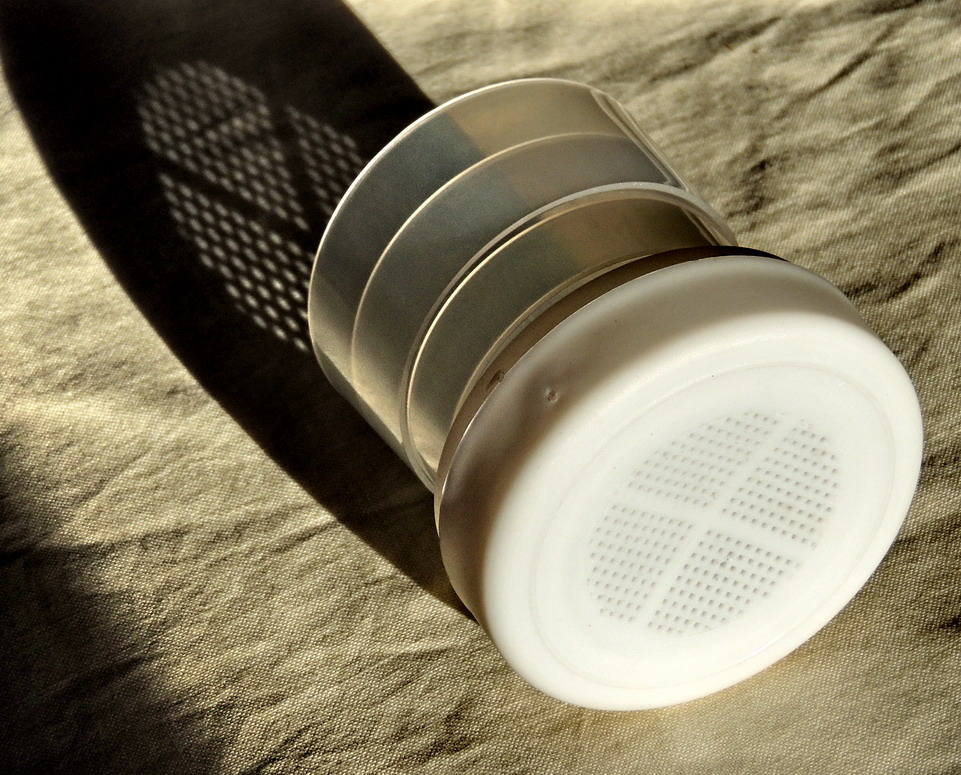
In the morning J made an appearance at my bedside, claimed that he had done what he was supposed to do and if I was feeling alright, I could go. He also said that I would be given a plastic sieve to urinate through in order to capture any seeds that might escape my prostate. These should be stored in a lead cylinder that would be provided, and I should return them for hazardous waste disposal. He warned that I must not allow babies or small children to sit on my lap, and that if I were to partake in sexual intercourse, I was to wear a condom.

K collected me and when we got home, I went into the garden and tried pissing through that sieve. What a mess! What a wet joke! I tried using it once more and never again. A year or so later it occurred to me that what I should have done was urinate into a jug with a spout and then slowly pour it through the fine mesh. Too late.


For two or three weeks I experienced some discomfort but nothing to whine about or pop pain-killers for. One unwelcome and somewhat alarming side-effect of the therapy was the discoloration of my scrotum. Probably as a consequence of the needle repeatedly penetrating the perineum, bruising must have taken place and the sack containing my gonads took on a necrotic shade of purplish black. It must have reminded my wife of the vervet monkeys we had observed with amusement on a trip to the Kruger Park several years ago. It took months for my negroid complexion to lighten and regain its pinkish grey pallor.

About a month after the brachytherapy, I had to go into Hermanus for a CT scan. This was to make sure that my urologist had got his anatomy right and planted the seeds in the prostate and not some other gland. It turned out to be an interesting experience because it made me feel like I was participating in a science fiction movie.

I removed shirt, shorts, shoes and socks, and donned a flimsy grey smock before being led into the space station. Dominating the windowless area was a giant white plastic doughnut. The radiographer told me to lie down flat on my back upon a gurney and to remain perfectly still. She then left, closing the hatch behind her. After a few minutes I felt the trolley begin to move and I was passed very slowly feet first through the centre of the doughnut. A few seconds elapsed, reverse gear was engaged, and I returned head first through the doughnut to where I had started. The radiographer appeared and said the procedure was over and I could get dressed.

On my next visit to Dr J, he told me the scan had proved how accurate he was with the needle and that he had not missed the mark even once. I was pleased to hear this, but I was even more relieved to know that Medical Aid was going to pay the R6000 for my little trip into space.

I was obliged to see that unpleasant woman in Somerset West for one last time and she again told me to expect the worst.

Back at home I decided to embark on a project that would keep me physically active while my body and psyche recovered from the ordeals they had endured. For the next nine months I went about constructing an outside braai room using old building material that had been lying around for more than twenty years.

Three months after the brachytherapy I had a blood test and Dr J gave me a physical examination. With no unexpected side-effects being detected I was to see him again in six months’ time. Two more six-monthly visits went by and then the check-ups were reduced to a yearly routine. Now, more than 5 years after being diagnosed, my PSA level remains low and I feel about as healthy as a decrepit 70-year-old could hope to. However, as J assured me the last time he gave me the finger, with cancer you can never say you are cured.

How right he was. 

To view my longer work as an author, you can find me on Smashwords here.

Monday, November 14, 2022

How To Become an Entrepreneur

While in the army, Plug had received some advice from the Quartermaster.

“If you want to learn how to make good money in the world of business and finance, and you don’t want to actually have to do any work, all you need to do is observe and then imitate the behaviour of the members of an upmarket golf club.”

Accordingly, immediately upon discharge, Plug had taken a 2-week job as a waiter in the clubhouse of a larney Country Club. In that fortnight he absorbed a great deal of important information. The single most useful observation had to do with what he called the ‘cigarette box scheme.’

“I soon noticed a pattern,” he said. “Whenever two or more of these capitalists began discussing something in earnest, it was inevitable that one of them would start scribbling on the back of a cigarette box. Dunhill, usually. Looking over their shoulders, I saw that it was simple arithmetic, with an emphasis on multiplication. It became apparent to me that the inspiration for every innovative idea in the history of human civilisation was developed on the back of a cigarette box, or a scrap of material similar in size.”

“Our garden boy used to do sums in the sand with a stick,” said Frikkie.

“Exactly,” said Plug. “How much space does one need to write down E=mc²?”

“A matchbox would be plenty big enough,” said Frikkie.

Plug then produced from his pocket a piece of foolscap and a ballpoint. The paper was folded in half, and half again.

“Not being a bloody fool,” he said, “I don’t smoke, and as a consequence don’t carry a cigarette box around with me. But this is roughly the same size, and far more convenient. If I use both sides, it’s equivalent to 8 cigarette boxes. That’s space for 8 brilliant ideas.”


This is an extract from Frikkie and Plug, which is available on Smashwords.


Friday, November 4, 2022

Tough Times


Man, but this life is hard! You know how much trouble and pain I’ve had ever since I was a kid? A father who beat us until he cleared off to the US, never to be heard of again, and a mother who drank herself to death. Then my first marriage. What a disaster that was! Two kids and nine years later she divorced me, and I can’t say I blame her. First I lost all of her savings and the money her father left her. That was when my business went under and the creditors grabbed everything we had. And when she caught me messing around for a second time it was the final straw.

It was good that my present wife had a hysterectomy before we met. At least we don’t have children to bring up. Things were kind of alright for a while. We both had quite decent jobs, she at the guest lodge and me on the whale boat. Then along came Covid and tourism collapsed. We drew unemployment benefits for as long as we could. She was lucky to get a job at the supermarket in Gansbaai but the hours were long and the pay half what she used to get. As for me, I eventually gave up wasting time and money hunting for non-existent work and became a house husband.

I had to do all the cooking, cleaning and washing, and I was garden boy as well. It was not too bad at first, there being just the two of us, but then disaster struck. Her mother arrived on the scene. She had been living alone in her house in Cape Town. It was an old place but, because it was in the City Bowl, was worth close on five million. After her husband died she became depressed and began to show signs of dementia. When it became clear she could no longer live alone, the house was put on the market. The old boy had stipulated in his will that should the property be sold the proceeds were to be held in trust and only the interest could be used to take care of his widow. He probably knew that my wife and her brother would have tried to get their hands on the money and there would not be enough to see her to her grave.

She could have gone to an old age home where she would have been looked after in style, but my scheming brother-in-law, who had also hit hard times, came up with a different plan. For one third of the monthly interest money, he would handle the sale of the house and contents, and attend to all the admin, while my wife would get two thirds for taking in her mother and looking after her.

There was not much choice. We were two months behind with the rent, the price of petrol meant getting to work took nearly half her salary, and by the 15th we were eating pap and gravy just like the folks in the townships. The extra money has certainly made a big difference, but it now means that I not only have to do the housework and the garden, but also take care of a senile old lady.

Because of her depression, for which she takes a load of useless medication, she is reluctant to get up in the morning. After the wife has gone to work I tidy up and do the dishes. Then, at eight o’clock I take her coffee. I knock on her door and as I open it, I call out, “Mom, are you awake?” Of course, she is not awake. I put down the coffee and open the curtains. “Are you awake, Mom?” She mumbles and stirs. “Time to get up, Mom. It’s after eight on a lovely Thursday morning.” I tell her what day it is in the hope that she will remember and not keep asking me every five minutes. “Don’t go back to sleep, Mom. Drink your coffee.” Only when she sits up and reaches for the mug can I leave her.

I eventually persuade her to get out of bed and come to the kitchen, where I give her breakfast and make sure she takes her meds correctly. Around nine she goes to the bathroom. She cannot handle the shower on her own so I run her a bath. She finally emerges after splashing a lot of water on the floor for me to dry up. It is close on eleven when she comes out of her room to sit and have tea in the lounge or on the stoep, depending on the weather. She used to love novels, I am told, and now likes to sit with an open book in her lap. I think it is just a pretence, though, because she is evasive when I ask her what the story is about. I make lunch for one o’clock and we eat it together, mostly in silence. Sometimes I will turn the radio on and listen to the news and make comments but she hasn’t a clue about what is going on. “Man, but these ANC monkeys can’t stop stealing!” I say, and she looks at the window, a little alarmed. “Are there monkeys outside?” “No, don’t worry, Mom. The monkeys are all in Parliament.”

My wife insists I take her mother for a walk every day if it is not raining or blowing a gale. She says it will help to keep her mobile and it is also good for her mental health. And what about my mental health? It is no use complaining, because I know what she will say. If I don’t want to cooperate, then I can forget about sex. Not that every two weeks is much of a sex life. And the last time, can you believe it, she actually fell asleep while I was still doing my thing!


Inside the house she uses a stick, and she has a three-wheeler for outdoors. When I get her out at 3pm I find it easier and safer just to take her arm. We need nearly half an hour to shuffle round the block. I once said to her that if we go any slower a tortoise will overtake us, but she ignored me. Sometimes I try to encourage her with motivational rubbish about what a beautiful day it is, and how spectacular the flowers have been, but normally she just grunts. Then, a couple of weeks ago, I urged her to cheer up and enjoy being out in the fresh air while she was still able to. She came to a halt, looked into the distance, and sang in her hoarse, old woman’s voice the refrain from an almost forgotten song.

Enjoy yourself, it's later than you think
Enjoy yourself, while you're in the pink
The years go by, as quickly as a wink
Enjoy yourself, enjoy yourself, it's later than you think

She turned to me and actually gave a triumphant smile. I nearly fell on my back. So, there was still a faint spark left in her, I thought, but it soon went out and she lapsed into gloomy silence once more.

When we get home, she collapses onto her bed and stays there until the worker returns. During the evening meal my wife tries to engage in conversation with her mother but it is so one-sided and unrewarding she soon gives up. After supper the old girl stares at the TV for an hour and then goes to bed. And that is the routine, seven days a week, week in and week out.

No wonder I feel trapped. No wonder I have become increasingly desperate in my search for an escape from this purgatory. I suppose it was inevitable that my thoughts would turn to euthanasia.

Our situation deteriorated. With constant load-shedding and the ever-rising price of petrol and food the supermarket was losing money. My wife came home in a state and announced that she would have to take a pay cut or lose her job. And the car was starting to use oil.

It was after she got stuck in the bath that I began to work on a plan of action. I heard her shouting my name and when I called through the door and asked if she was alright, she said she needed help to get out. Instead of kneeling, as she had been told to do, she was sitting in the bath. Of course she could not hoist herself up. Over the years she has been putting on weight until now she is built like a hippo. I had to take off my shoes and socks and stand in the bath behind her and grab her under her arms in a kind of bear hug and heave her up enough for her to get onto her knees. I helped her to stand and climb out of the bath before leaving her to dry off and finish her ablutions.

Well, after having manhandled the naked old woman, I tried to analyse my feelings. Apart from acute embarrassment, I was filled with a strange mixture of pity, anger and self-loathing. Was looking after this miserable old vegetable all that was left in my life? What kind of excuse for a man had I become?

I now began to see her in a different light. When I studied her features all I saw was unhappiness. The deep lines around her down-turned mouth make her look bitter and resentful, and her eyes are dull and unfocussed, giving the impression of sadness and disappointment. There is no joy in her life, and no hope. She merely exists. More than that, it is a futile existence that benefits no one, including her. We would all be better off if she were dead.

This is how I began to think. If she died my wife would inherit her two and a half million and we would be free to start living again. But if the old woman is not taken out by a heart attack or stroke, her Medical Aid could keep her going for years to come. Maybe the time had arrived to not only help her out of the bath, but to help her out of this world and into the next.

I began to daydream about a modus operandi. I ruled out staging a suicide, and shied away from poison. Then I remembered a scene from some years back. I had trapped a rat in a cardboard box, and to kill it I dropped it into a bucket of water and held it under with a pair of braai tongs. It struggled violently for about a minute and then went limp. I was about to let it go when there was a final flurry. The drowning process had taken no longer than three minutes.

Of course, I wasn’t going to attack the old woman while she was in the bath. But what about smothering her in her sleep? I could creep into her room during her afternoon nap and use a cushion to suffocate her. She would struggle like the rat did, no doubt, but not for long. The horrible process would take no more than five minutes at the outside.

I told myself that it would be an act of kindness. She would be released from the hopeless misery of this pointless routine she was forced to follow. By keeping her going we weren’t doing her a favour, and at the same time we were ruining our own lives.

It was ten days ago that I finally made a move. In a state of extreme agitation, my hands shaking, I quietly opened her door. The curtains were closed against the afternoon light and all was quiet. I stealthily approached her bedside, holding the cushion before me.

“Yes? What do you want?”

I tell you, I nearly jumped out of my skin. In the gloom her eyes were wide open and she was looking at me.

“Oh, I just wondered if you would like some tea?”

“Tea? Not now. I’m trying to rest.”

I suppose I should have followed through anyway, but my courage deserted me. I would have to psych up again, and next time only make the attempt if I could hear her snoring.

A week went by before I was in the right state of mind to act. Then, on the morning I resolved to do it, to calm my nerves and keep busy, I went out on the pavement and started to trim the hedge. I had not been at it for long when the old man from up the road came by with his dog. We exchanged greetings and he stopped to talk.

He said he had been meaning to speak to me for some time now. He just wanted to say how much he admired me for the way I was looking after the old lady. Was she my mother? I put him right and he went on to claim that there weren’t many young men today who would sacrifice their time to improve the quality of life of a decrepit old relative. I didn’t say that 46 was hardly young, and he continued to heap praise on me. My behaviour showed that I was a compassionate human being with strong moral fibre. In his book that was what constituted a real man.

He went on his way and I returned to the house. In the bedroom I closed the door and lay down on the bed. After a while I began to cry like … like a man. My cheeks were wet. Then I heard her calling. She was shouting my name the way she did when she got stuck in the bath. Now what?

Yes, when I say life is hard, I know what I am talking about.

To view my longer work as an author, you can find me on Smashwords here.

The Smarty Solution

    (Image: Ideogram.ai)     Let’s face it: growing old is a miserable story. Take for example one old toppie who thinks he ha...