Saturday, September 16, 2023

Pat’s Story by JM Synge


I chanced upon this story a long time ago while I was pretending to study for a B.A. at the University of Cape Town. It immediately appealed to me because it was so improbable it could only have been related as factual by a narrator who derived ironic pleasure from testing the credulity of his audience.  

Here is the story, which was recorded by Synge on a visit to the Aran Islands off the west coast of Ireland around 1900.


One day I was travelling on foot from Galway to Dublin, and the darkness came on me and I ten miles from the town I was wanting to pass the night in. Then a hard rain began to fall and I was tired walking, so when I saw a sort of a house with no roof on it up against the road, I got in the way the walls would give me shelter.

As I was looking round I saw a light in some trees two perches off, and thinking any sort of a house would be better than where I was, I got over a wall and went up to the house to look in at the window.

I saw a dead man laid on a table, and candles lighted, and a woman watching him. I was frightened when I saw him, but it was raining hard, and I said to myself, if he was dead he couldn't hurt me. Then I knocked on the door and the woman came and opened it.

'Good evening, ma'am,' says I.

'Good evening kindly, stranger,' says she, 'Come in out of the rain.' Then she took me in and told me her husband was after dying on her, and she was watching him that night.

'But it's thirsty you'll be, stranger,' says she, 'Come into the parlour.' Then she took me into the parlour—and it was a fine clean house—and she put a cup, with a saucer under it, on the table before me with fine sugar and bread.

When I'd had a cup of tea I went back into the kitchen where the dead man was lying, and she gave me a fine new pipe off the table with a drop of spirits.

'Stranger,' says she, 'would you be afeard to be alone with himself?'

'Not a bit in the world, ma'am,' says I; 'he that's dead can do no hurt,' Then she said she wanted to go over and tell the neighbours the way her husband was after dying on her, and she went out and locked the door behind her.

I smoked one pipe, and I leaned out and took another off the table. I was smoking it with my hand on the back of my chair—the way you are yourself this minute, God bless you—and I looking on the dead man, when he opened his eyes as wide as myself and looked at me.

'Don't be afraid, stranger,' said the dead man; 'I'm not dead at all in the world. Come here and help me up and I'll tell you all about it.'

Well, I went up and took the sheet off of him, and I saw that he had a fine clean shirt on his body, and fine flannel drawers.

He sat up then, and says he—

'I've got a bad wife, stranger, and I let on to be dead the way I'd catch her goings on.'

Then he got two fine sticks he had to keep down his wife, and he put them at each side of his body, and he laid himself out again as if he was dead.

In half an hour his wife came back and a young man along with her. Well, she gave him his tea, and she told him he was tired, and he would do right to go and lie down in the bedroom.

The young man went in and the woman sat down to watch by the dead man. A while after she got up and 'Stranger,' says she, 'I'm going in to get the candle out of the room; I'm thinking the young man will be asleep by this time.' She went into the bedroom, but the divil a bit of her came back.

Then the dead man got up, and he took one stick, and he gave the other to myself. We went in and saw them lying together with her head on his arm.

The dead man hit him a blow with the stick so that the blood out of him leapt up and hit the gallery.

That is my story.


In The Life of Henry Fuckit, Henry has a conversation with Harry Bergson in which the telling of tall stories is touched upon.

“My whole life became a sham. After a few years I had become a compulsive liar, a pathological confabulator. At first it started as humorous exaggeration, light-hearted tall stories told for the sake of entertainment. Then I began to see these creations in my mind as a way of impressing and manipulating. I began to lose track of what I had said to whom. I even began to believe some of my own embellishments and fabrications."

"What kind of things did you lie about?" As an inveterate manipulator of reality himself, Henry was curious to hear more about someone else's ability to invent.

"Oh, at first, it was pretty harmless stuff. It was more like boastfulness than downright mendacity. My sporting and academic achievements, progress at work, sexual prowess - that sort of thing."

Henry was not impressed. "Sounds as if you were a bullshitter. Plenty of those around. On a far more creative level is the teller of tall stories. You tell a story that is fantastic or exaggerated but almost plausible. The skill is in placing it just beyond the bounds of logic, so that an intelligent listener is able to pick up the clue that makes the story nonsense or an impossibility. The drawback comes when you have an audience too stupid to get it. You find yourself faced with an irritating dilemma - do you allow them to swallow the crap you've been dishing up, and thereby turn yourself into a cheap liar, or do you labour on, heaping one absurdity upon another until they finally see what you're up to, and in the process turn subtlety and wit into coarse buffoonery?"

The full exchange can be read on my website here.

To view my longer pieces, you can find me on Smashwords here.

Saturday, September 9, 2023

Beyond Belief


(Painting by Walter Meyer)


This uncle of mine, the one who died of a heart attack on the toilet, once told me a story that really grabbed me and stayed in my memory and sat there festering in my imagination like some parasite trying to make an illegal connection to the synaptic grid. To die of a heart attack on the toilet is an ignominious way to go, but it shouldn’t affect the veracity of the bullshit stories one has passed off as no word of a lie and as true’s God. This is something I feel firmly about, and I can say that the fact he died on the toilet made fuckall difference to the way I remember his story.


It went like this.

When he finally topped the rise the twilight had faded into dusk. In the murk ahead he was just able to discern a broad flat valley backed by a line of black hills. The building stood on the open plain, unprotected and solitary. To his surprise a feeble light glimmered at a window. What was there for people to do out here in this barren waste? He hurried on, anxious to beat the dark.

As he approached the building he began to worry about dogs. He had heard no barking but at any moment he expected the silence to be torn by a warning howl followed by furious baying. He had no means of protecting himself. From what he could make out the house was in a state of neglect but the windows were still glazed and he saw the glint of metal against the dark solidity of the front door. As quietly as he could he approached the lighted window and looked in. The room was dimly lit by candles and a single oil lamp. On the table lay the body of a man covered with a plain white sheet. The sheet was drawn up to his neck and his chin pointed sharply ceilingward. Not a young man, maybe fifty or sixty, a gaunt face and bald dome of a head. Then from the right there appeared a woman, barefoot, long hair flowing loose, tying the belt of a bathrobe. Carelessly she tossed a towel over a chair and went to the sideboard. She lit a cigarette and began to pour from a bottle into a glass. Jesus, what was he to do? It was almost completely dark and a hard wind had sprung up, helping him to make up his mind.

"Who is it?" In response to his knock on the door her voice was aggressive and without fear.

"A stranger. I'm a hitchhiker, stranded on the road."

After a few moments the door opened. It had been unlocked all the time. A flashlight shone in his face and then dropped to his chest and he saw she was holding an extremely large pistol.

"I'm so sorry to disturb you, madam. I've been overtaken by nightfall. You don't have an outbuilding where I could get out of the cold, just for the night, do you? If you can help me, I'll be on my way again at first light."

"Come in." She lowered the gun and he followed her into the room. "You've chosen a bad time. My husband's just died on me." He stood looking down at the pale skin drawn tight across the facial bones, the half-closed eyelids, the gaping thin-lipped mouth, the scrawny neck of a chicken. "Want a brandy?" She was at the sideboard.

"Er, yes please. Just to keep you company. For the shock. You must be…"

"He was ill for a long time. I treated him badly and he hated me. It's a relief." She spoke flatly, without emotion. This woman wasn't more than thirty-five, forty at the most. He ran his eye over the shrouded body and noted the splay of the feet beneath the sheet. The outlines struck him as entirely authentic, one hundred percent cadaverous. "The undertakers are coming in the morning."

He took the glass and drank the neat brandy.

My uncle stopped the story right there, but it was understood that he had gone to bed with the widow, and then hit the road again in the morning.

I like this story because it’s audacious and so improbable it might well be true. It has a startling freshness to it that makes me wonder if there isn’t something archetypal at work here. Like it seems to be loaded with unexplained symbolism of the type Carl Jung babbled on about. Something like a dream dredged up from the collective unconscious. Not that I believe for one moment in unscientific crap like the collective unconscious.

Now, the reason why I have recounted my uncle’s story is because just the other day I was reminded of it by another story told by no less of a gifted bullshitter than my good buddy, Cupcake.

We were at the other guy’s place and we were also drinking brandy, but it was topped up with Coke and not neat like in my uncle’s story. Cupcake had just got back from Joburg, where he had been visiting his sister. He had nearly written himself off while driving through the Karoo, and was still shaken up and in need of more than his fair share of brandy to calm his nerves.

“It was in the middle of the Karoo, about 50 k’s from the nearest town,” he said. “It was just getting dark when this buck runs out in front of me. Instinctively, I swerved, my wheels hit the gravel verge, and the next thing I knew I was crashing through a barbed wire fence and bouncing off into sheep country. Lucky I didn’t roll.”

“Did you hit the buck?” asked the other guy.

“No,” said Cupcake. “But when I went through the fence I smashed my lights. Otherwise, there was no major damage. Just a whole lot more dents and scratches."

“You must have got one helluva skrik,” I said.

“That’s for sure,” said Cupcake. “But anyway, there I was, trying to get back up on the road, and it was fully dark by then, when along comes this black dude in a bakkie and gives me a hand. He’s the farm foreman and says I can follow him to the farm house and stay there for the night. But when we got to the house, which wasn’t far away, a young woman opened the door, and she wasn’t charmed to see me. She said this wasn’t a good time, because her father had just gone and died. But I could sleep on the couch in the living room.”

“So, there was a corpse in the house?” I said.

“Yah, in the bedroom,” said Cupcake. “Anyway, after a while the woman offers me a drink and we sit there in the living room. She tells me she’s glad her father is dead, because he was a bastard. He treated her dead mother like shit and he treated her like shit, too. In fact, he treated everyone like shit. We had another drink and then the foreman dude comes in. He doesn’t say anything but goes down the passage and I hear a door close. The woman finishes her drink and says she’s going to sleep now, and also goes off down the passage and I hear a door open and close. So there I am, alone in the living room and it’s getting late but I don’t feel like trying to sleep. I drink more of her brandy and start thinking about the dead man lying in the bedroom.”

“Creepy, hey?” I said.

“Not really,” said Cupcake. “I was more curious than anything. So I get up and go and look down the passage, and there’s a door standing open and the light’s on. When I look inside, I see the corpse lying stretched out on the bed with a sheet over it up to the neck. I go in and take a closer look at this guy, and he looks a real old bastard, just like his daughter said. Heavy, brutal features. Now, just as I’m about to turn away, I take a last look and the fucking corpse goes and opens its eyes and looks straight at me.”

“What?” said the other guy, nearly choking on his b&c.

“Yah,” said Cupcake. “Looks me straight in the eye and I jump about a foot in the air. Then the corpse sits up and says He’s not really dead. He’s only been acting dead so he can catch his slut of a daughter carrying on with that fokken kaffer of a foreman. He gets up and goes to the wardrobe and takes out a sjambok. Then he walks down the passage, throws open a door, and all hell breaks loose.”

“Jesus!” said the other guy. “Then what did you do?”

“I thought to myself, Fuck it, I don’t need to get caught up in this kind of shit, and I ran outside, jumped in my car and drove off at speed, even though it was the middle of the night and I had no lights. I somehow managed to make it to the next dorp, where I stopped and waited for daybreak. Then I carried on back to Cape Town.”

By this time, I was experiencing an acute bout of déjà vu, and then I remembered my uncle’s story and realised why. Cupcake’s advemture bore some strikingly similar features to my dead relative’s, and both my buddies agreed with this observation once I had finished recounting the uncle version.

“Have either of you read anything by the Irish playwright JM Synge?” asked the other guy. There was a kind of startled look in his eyes.

“Nope,” I said.

“Negative,” said Cupcake.

The other guy doesn’t have shelves but there are piles of books on just about every flat surface. He went to one of them and extricated a volume.

“This is uncanny, man,’ he said. “Synge also wrote short pieces, and this one is called ‘Pat’s Story’. Let me read it to you.”

When he was done, we sat looking at each other with our mouths open, like we were a trio of half-wits. This Irish story was just too similar to the other two for there to be a rational response forthcoming.

“Well, I dunno what to say,” said Cupcake.

“This can’t be possible,” said the other guy.

“There’s something seriously fucking weird going on here,” I said.


‘Pat’s Story’ can be read in the next post.


Other pieces in the Me, Cupcake and the Other Guy series:

Good News for Old Toppies

Paradoxical Materialism

Rhino Reality


To view my longer work as an author, you can find me on Smashwords here.

Tuesday, August 29, 2023

I Pissed on My Foot


Around 4am I awoke with a full bladder. Outside in the back garden it was cooler than I had anticipated and the dewy lawn was cold underfoot. In a clear sky the Southern Cross was where it was supposed to be and the sound of the sea was coming from the southeast. As I relieved myself some urine splashed onto my left foot. Annoyed, I directed the stream further from me. At the same time, the sensation registered in my brain and I was surprised at how hot it had felt. Body temperature. That’s how hot my blood must be. Experimentally, I directed the stream, which was still strong, downward, and again felt the hot wet sensation. Annoyance was replaced by pleasure. Abandoning inhibition, I began to douse my bare toes and relished the delicious warmth. I recognised it as the same guilty pleasure when voiding inside a wetsuit, or that initial feeling of relief that jolts one out of a dream that could end in disaster. Recklessly, I pissed all over my foot before aiming the last of the dwindling stream away to the right. I could already feel my foot going horribly cold, and the wetness between my toes and the feeling of standing with one foot in an icy puddle disgusted me. Now I would have to wash my feet under the garden tap and go inside and thoroughly dry off before returning to bed. Why had I given in to such a rash impulse?

Lying under the covers waiting to warm up before drifting back to sleep, I thought about what I had just done, and it now struck me as comical rather than shameful. After all, this was a matter between me and my left foot, and involved nobody else. What is more, it was far less reprehensible than the behaviour my father had once indulged in as a young man. It amused me to think that I could see similarity in what he had done more than 80 years ago and my recent escapade in the garden.

When he was in his late seventies or early eighties we had a conversation about getting drunk. I said it was a long time since I had been really drunk and that although I liked to tipple I tried not to overdo it in dread of waking up with a hangover. In my youth I had been heavily inebriated on many occasions, even to the extent of falling over and suffering blackouts, or permanent memory loss, induced by alcohol poisoning. But I had never had the DT’s.

I told him about some of the alcoholics who had been admitted to A1, the medical ward at Groote Schuur where I worked for a time in the 70’s. They had to be restrained in bed until the delirium tremens wore off, all the while shouting in terror as they hallucinated.

“I can’t remember ever seeing you drunk, Dad. Not even unsteady on your feet.”

“No. But when I was in the Air Force, before I was married, I got horribly sozzled a few times.”

He then told me about the incident in question. It was before the War while he was stationed at Biggin Hill. He had been given a weekend pass, and on the Saturday he changed into civvies and went to a pub in a nearby village. In the course of the evening, he became progressively more intoxicated until he passed out. When he came round, he found himself in a doorway. As it was now late and there was no traffic, he realised he would have to walk a few miles back to base along a deserted country road.

After weaving his way for more than half an hour he began to feel a pressing need to evacuate his bowels. He went to the ditch at the side of the road and lowered his trousers. It then occurred to him that he should be doing this into a chamber pot and not on the ground like an animal. But where could he find a chamber pot? The only thing that remotely resembled one was his hat, which I assume was a trilby.

Having defecated into the trilby he straightened up and was buttoning his trousers when another wild thought entered his befuddled mind. Having paid good money for it, how could he abandon his trilby at the side of the road? Replacing the hat on his head, he then resumed his journey and staggered the remaining couple of miles back to base.

I was astounded and delighted by this anecdote. This was something a Samuel Beckett character would have done. That is why, if ever, like now, I think of impulsive and rash decisions I have made, I recall this episode and it takes the edge off any feeling of regret that might afflict me.


To view my longer work as an author, you can find me on Smashwords here.

Sunday, August 20, 2023

Too Much for Old Toppies


It was Voice Simulation that did it. 

He retired in 2006 at the age of 60, and I quit the rat race in 2010, also at 60. He was an insurance man and I was in construction, and I can say that neither of us was techno phobic or a luddite. In fact, we both welcomed the arrival of computers and the internet, as well as the early cell phones. However, as more and more innovations were introduced to everyday living, it became increasingly difficult to keep up and remain ‘with it.’

Four years younger than my brother, I seem to have coped a bit better than he did, but whenever we were in touch, we almost always got round to talking about our shared frustration in trying to keep abreast of all the changes that were happening.

“Just as you get the hang of something, the bastards go and change it,’ he would say, and I would agree with him. “And there’s all this tech jargon that means nothing to us. My computer froze and they told me I needed more memory. Something about RAM and ROM and a bigger hard drive. Total Greek, so I just told them to do what is necessary. And when I went to collect the PC, you know what this little shit says to me? He says I should delete some of my browsing history, or I might be in trouble with the wife. He showed me how to do it but I was so angry and embarrassed it didn’t sink in.”

We agreed that just about every aspect of modern life has become more of a mission to navigate. When you go to some supermarkets you can no longer pay with cash, and you have to have a credit card and make sure you can remember your PIN and know how to check your balance on your phone, if you have installed the App and know how to access it. And at the bank they don’t want you to come inside and talk to them. You have to stand in a queue outside in the cold and hope you beat load-shedding and your card doesn’t get swallowed, or find that some swine is looking over your shoulder trying to steal your details.

“The kids tell me all this digital stuff makes life easier and frees up time to do other things. They say it’s all designed to be intuitive. Well, it might be intuitive if you have grown up with it and spend your life staring at a screen and swiping and tapping and liking and sharing and taking selfies. It might be intuitive for them, but my intuition tells me this is not a healthy way to live your life.”

On another occasion he said, "Have you noticed how little respect for the elderly young people have nowadays? They look on us with a mixture of pity and contempt. We have nothing to offer them apart from money, if we have any. They don’t value our judgement or opinion because we are out of touch with what is really going on, and Wikipedia and Google are far better and more credible sources of information about the past as well as the present. They consider what we have to say as irrelevant and, what is worse, they resent having to waste time teaching us how to use digital devices, install software and apps, and decipher the unintelligible questions and choices being fired at us every step of the way. They see us as a tiresome nuisance in their busy lives”

He felt increasingly disempowered and alienated, but although he complained to me, he managed to get on with things without any major mishaps. That was until he was scammed. It was on a Sunday afternoon about three months after his hip replacement. His wife had gone out to see some friends when his phone rang and an official from the bank informed him that his savings account had been hacked and the criminals were in the process of stealing his money. He later said that the woman on the line was very professional and convincing, and had all his personal details in front of her. She said he should immediately transfer his funds into a safe account in order to thwart the attack. Of course he was thrown into a panic and followed instructions until she assured him that his money was now safe.

When his wife returned, he told her what had happened. Almost immediately, after first letting out a scream, she phoned their son. He contacted the bank’s fraud line and they were able to confirm that the old man’s account had been cleaned out. Nearly a hundred thousand rand gone.

Well, they eventually managed to retrieve his money, but it took more than three months and a great deal of hassling by his family, not to mention the inconvenience and anxiety experienced by all. During the process he was repeatedly reminded of how foolishly gullible he had been to fall for such an obvious scam. Not surprisingly, the incident severely undermined his self-confidence and he became increasingly distrustful and paranoid. He refused to go anywhere near an ATM, leaving it to his wife to draw money for him, and he would only shop where they still accepted cash. As for phone calls, he would jump whenever his mobile rang, fearing having to deal with another scammer, and spam calls put him in a rage.

Then, a month ago, his granddaughter told him about deep fake technology, and that was what tipped him over the edge. She showed him how she was able to manipulate a picture of herself so that she looked like Margot Robbie. When she took a photo of him sitting in his lazy-boy and changed his features into those of King Charles, he was aghast. It was voice simulation, though, that proved to be the last straw. She made a recording of him in conversation and was able to play his voice reading a Philip Larkin poem about how parents fuck their children up. He was shattered, realising that he could no longer trust his senses to distinguish what was real and what was fake.

When I heard he had suffered some sort of breakdown, I tried phoning him. Eventually I got through, and it was like talking to a stranger and not my brother.

“You sound like Ian, but that means nothing.”

“Well,” I said, “ask me a question regarding something that only the two of us would know about.”

After a long pause he said, “When we were kids in Rhodesia, there was a boy next door who could spit through a gap in his front teeth. What was his name?”

“Jesus, Alan! That was more than 60 years ago. I can hardly remember what happened 60 days ago.”

An he hung up on me. I sat thinking for ages and it finally came back to me: Frikkie. The boy’s name was Frikkie Welgemoed. But it was too late.

When I saw him in the psychiatric clinic yesterday, he was sitting in a chair looking straight ahead and not moving a muscle. They had sedated him and his pupils were dilated and he did not respond to me in any way. It was like trying to communicate with a catatonic zombie. I spoke to the psychiatrist treating him and she said they were going to help him with some Electro Convulsive Therapy, which I understood to be what was called shock treatment in the old days.

My wife, who was with me, could see how distressed I was, and when we got home she poured me a stiff brandy and told me to sit on the stoep and calm down and get things into perspective. Just because my brother couldn’t handle reality anymore and had lost his mind, it was no excuse for me to fall apart and become a bigger worry to her than I already was. She confiscated my phone there and then, and told me to forget about all this AI nonsense. Instead, I am to get out in the garden and mow the lawn. And the hedge needs trimming and, and, and. What I need is some physical exercise out in the fresh air away from digital technology and cyberspace and deepfake trickery. I must leave that stuff to the youngsters and accept that I am too old to keep pace with the modern world. 

Maybe she is right, but it sounds like admitting defeat and joining the geriatric queue waiting to go from assisted living into high care.

To view my longer work as an author, you can find me on Smashwords here.

Friday, August 4, 2023

Frikkie And Plug Get Real


One evening Frikkie invited Plug over to meet Clarissa. He had given Annetjie the boot, because she had failed to meet expectations, and Zelda had committed suicide. In her farewell note Zelda blamed Frikkie for her death, but refrained from mentioning anything about her bipolar schizophrenia and heroin addiction.

“I don’t need any more of that shit in my life,” was Frikkie’s comment after he had delivered a moving eulogy, waved goodbye to the hearse, and accepted a cup of lukewarm tea in the church hall. “Women are nothing but grief.”

“Yes, but what about your hormones?” a well-meaning mourner had asked him. It was a valid point.

For some time after Zelda’s demise he placated his hormones when they became strident by calling Jasmine and having her send round a companion for the night. But he found it increasingly difficult to feel any ardour for these women and he derived no lasting satisfaction from the impersonal encounters. Then he heard about RealGirl dot com.

“Hello, Clarissa,” said Plug. He took her hand, which was small and soft. She was sitting with Frikkie on the couch watching men running about on a flat green surface painted with white lines. At intervals, tens of thousands of spectators shouted in unison, thereby giving purpose to the activity they were witnessing.

Aware of how deeply Plug detested its intrusive presence, Frikkie imposed silence on the screen and then plunged it into darkness. He got up to pour drinks.

“Nice hair, fabulous figure,” said Plug, settling into an easy chair. “Just your type, Frikkie.”

“Yes, I chose her from the online catalogue, and I wasn’t disappointed when she jetted in from the States this morning.”

“So you’ve still got to …er…get to know her?”

“I didn’t want to rush things,” said Frikkie, handing his friend a vodka, lime and soda. He sat down again and rested a hand on Clarissa’s knee.

Plug sipped his drink and stared. After a while his eyes became unblinking and glassy, and Frikkie knew he was no longer looking but thinking.

“Yes,” said Plug after several minutes, as if the word meant something despite being marooned in the middle of nowhere. “Yes,” he said again, adjusting his glasses on his face and focussing on Frikkie, “it seems that the human brain has evolved to the stage where constructed, or virtual reality has overtaken unmitigated, raw reality as the main interface between the external world and us.”

“Huh?”

“Billions of people now experience large chunks of their life by passively watching images on a TV screen, a computer monitor or a cell phone instead of engaging directly with the reality that is filtered and presented to them as news, or sport, or entertainment.”

“Is that so?”

“Take navigation,” said Plug. “These days, if you are driving from A to B, you hardly bother to orientate yourself using landmarks and the position of the sun, and you certainly don’t think about north and south, east and west. You just keep glancing at the dot you have become on your phone, or trust the Garmin lady when she tells you to turn right at the next intersection. And ships’ captains and airline pilots rarely bother to look out the window.”

“And that’s bad?”

“I’m not saying it’s good or bad,” said Plug. “I am just telling it like it is. Another example is the weather. Who still takes the trouble to predict if it will rain tomorrow by relying on their powers of observation? People used to be alert to a shift in wind direction, cloud type and formation, and colour in the sky at dawn and dusk. Not any more.”

“Red sky in the morning, shepherd’s warning? My father used to say bad weather was on the way when there was a ring around the moon. Talk shit. There would be three weeks of brilliant weather, and when it finally broke he said it was on account of that stupid ring around the moon. Kak! I’m quite happy to get a reliable, up to the minute forecast on my phone, any time day or night, thank you.”

“Yes, but at least your father was interacting with his physical environment on a one to one basis, and was aware of nature. Now people don’t even go outside to sniff the air.”

“I suppose you’re going somewhere with this?”

“I’m getting there,” said Plug. “What I am saying is that there is an increasing tendency to value objects and experiences not for their intrinsic qualities but for an image associated with them. The brand has become more than the product. The real product has been diminished and sidelined by its simulacrum, and people have become more susceptible to manipulation by those who are able to generate hype and promote the message underlying the image. Which is usually about buying something, no matter how ephemeral or worthless it might be.”

The liquid assets in both their glasses were exhausted and Frikkie got up to remedy the situation.

“So you’re thinking of ways to package shit and sell it as brown gold?” he said, now having a pretty good idea of how Plug’s mind was working. “What kind of shit?”

“There are a couple of possibilities that really appeal to me,” said Plug. “One is fake rhino horn. Many people in the East have been duped into believing that powdered rhino horn has supernatural qualities that make it effective as an aphrodisiac as well as a cure for cancer. Despite scientific proof that it is made of keratin, just like any other species of animal horn, it has become a highly sought after commodity fetching a ridiculously inflated price. It wouldn’t be that difficult to mass produce an artificial product indistinguishable from the genuine article.”

“I don’t know about this,” said Frikkie. “We could pick up serious trouble with the law if we start dealing in such stuff.”

“There would be nothing illegal about it,” said Plug. “We would be selling fake rhino horn, not the real thing. We would make that quite clear. If the people who buy it from us want to pass it off as poached rhino horn, well, that’s their problem.”

“Okay, that makes sense. So we would be selling to poachers and middle men?”

“Initially, yes. Then, as we slowly saturate the market, the price would come down until supply exceeds demand, consumers realise what gullible idiots they have been, the bubble will burst, and the rhino will be saved from extinction. And we would have made a lot of money while the going was good and before we sold out.”

“Well, that sounds pretty bloody cool. I like it. I think we must go for this in a big way. Refill?”

While Frikkie was busy with the bottles, Plug got up and cupped Clarissa’s chin in his hand and tilted her head back. Her full red lips were slightly parted and, as he had suspected, she was toothless. This mouth was designed for Frikkie’s pleasure, and Plug felt a twinge of envy.

“And what about that other brilliant idea you’ve had?” asked Frikkie once he was back on the couch.

“Ah, yes, stolen art works. It occurred to me that a famous painting or piece of sculpture acquires different value once it has been stolen and disappears.”

“How so?"

“Well, in the first place, its high value is due to its fame and the hype around it,” said Plug. “The original owner usually pays more for the prestige of owning it than for the artwork itself. When a painting is stolen its fame receives a massive boost on account of all the publicity around the theft. If recovered, its value will have appreciated far more than if it had not been stolen.”

“Makes sense. Are we going to buy an expensive artwork and then stage a burglary?”

“I thought of that,” said Plug. “Too risky, though. If we were found out they would nail us for fraud. No. Instead, I was thinking of targeting the vulgar billionaires who would happily buy a work from the professional art thieves, and offer them a high quality replica of a stolen masterpiece. Instead of forking out $5 million, they could pay us a mere 500 thousand, hang it on the wall, and boast to their odious pals that it is the original.”

“And it could be. That’s clever,” said Frikkie, nodding his head repeatedly, as if he was suffering a bout of Parkinson’s. “The asshole owner of the forgery would never allow it to be examined by experts. Pity we wouldn’t be able to sell more than one copy.”

“Why not? Unless the original was recovered, no one would ever be able to dispute the authenticity of our product. We could sell any number of copies until the real thing turned up. Only then would the bubble burst.”

“I like this,” said Frikkie. “It works on the same principle as the fake rhino horn. We can be strictly up front about the product and leave it to the creep who buys it to tell lies and play games, if that’s what turns him on.”

Over another drink or two they began to work out the plan of action that would be needed to set up a horn factory and an art duplication studio. By now they were well accustomed to this more mundane side to the strategising process, and after a while Frikkie began to show signs of restlessness. Plug got to his feet.

“Well, Frikkie,” he said, “it’s getting late and we can work on the details tomorrow when we are fresh. I’m sure you and Clarissa are ready for bed.”

“Yes,” said Frikkie, accompanying Plug to the door. “We’re going to watch a bit of porn, and then we’ll hit the sack. See you tomorrow.”


This extract is from Frikkie & Plug. Click here to view the complete book.


To view my longer work as an author, you can find me on Smashwords here.

Monday, July 31, 2023

Hats Off to the Conservancy

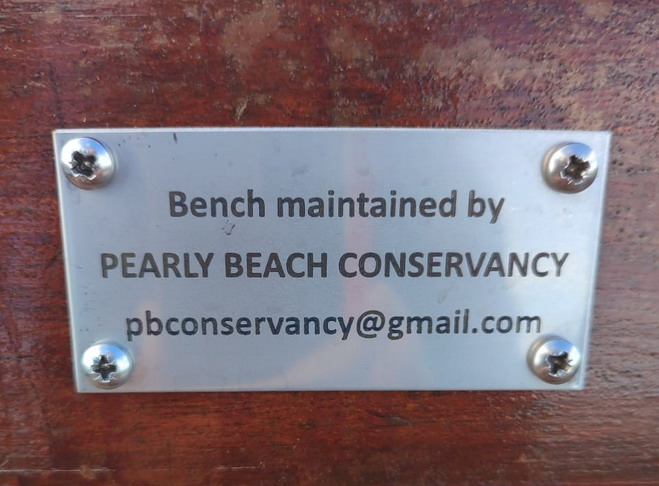
Dedicated members of the Pearly Beach Conservancy have rehabilitated two of the sea-facing benches, of which there are more than a dozen positioned along the shore. The before and after photos show how wind erosion undermined the concrete bases and how they have been stabilised.


These benches are a valuable amenity for local residents and visitors, providing somewhere to sit and enjoy the view, the sun and the sea air, and thereby improve their physical and mental well-being.


 Excerpt from "The Awakening" by Kate Chopin: 

"The sea, vast and mysterious, stretched out before her like a blank canvas, inviting her to fill it with her thoughts and dreams. She sat on the bench, feeling the cool breeze on her face, and contemplated the vastness of the universe and her place within it. The waves whispered secrets to her, and she listened with an open heart, finding solace in the rhythm of the tides."

Excerpt from "Leaves of Grass" by Walt Whitman: 

"He sat on the bench, gazing at the sea, and as he looked, he felt a deep connection with all living things. The waves carried stories from distant lands, and the seagulls sang songs of freedom. He contemplated the vastness of the ocean and the eternal ebb and flow of life, finding comfort in the knowledge that he was but a small part of a grand and interconnected universe."


Here are five reasons why one should consider joining and supporting a local Conservation Society:

1. Local conservation societies work to protect and preserve the natural habitats and ecosystems in their area. By joining such a society, you contribute directly to the conservation of local flora and fauna, ensuring that native species and biodiversity thrive for future generations.

2. Conservation societies often promote sustainable practices for managing natural resources. Through education and advocacy, they encourage responsible use of resources like water, land, and forests, helping to maintain ecological balance and prevent overexploitation.

3. These societies play a crucial role in educating the community about environmental issues, ecological processes, and the importance of conservation. By joining, you not only increase your own knowledge but also help spread awareness among others, creating a more informed and environmentally conscious society.

4. Local conservation societies are active advocates for environmental protection and sustainable policies. By supporting them, you strengthen their voice and influence, which can lead to more environmentally friendly laws and regulations at the local and regional levels.

5. Joining a conservation society offers a sense of belonging to a like-minded community with a shared passion for protecting nature. Being part of a collective effort to safeguard the environment provides a profound sense of purpose and the opportunity to make a tangible impact on the world around you.


To view my longer work as an author, you can find me on Smashwords here.

Sunday, July 23, 2023

Takeabody


“I’ve just had an SMS.”

“From?”

“Takeabody. Listen to this: ‘Good day. Collection of your husband’s body has been scheduled for no later than 5pm on Thursday 25 June. Please ensure that the corpse is in a hygienic state and lying in a supine position with straightened limbs.’”

“Thursday? But that’s tomorrow. It must be a mistake; I’ve been feeling fine of late. Or maybe it’s a scam. They send a fake Takeabody message, and when you respond, they offer to move the date if you pay a large amount into their account.”

“There’s a reference number. It looks authentic.”

“Well, if it is genuine, Their AI forecaster must foresee a heart attack, or a stroke, or something. At least, if it’s true, I won’t suffer a lingering death.

“We will just have to wait and see. What else can we do?”

“We can’t just sit around waiting. Let’s go out for a meal, and when we get back I’ll take some Viagra. How about it?”

“All right. You always said you wanted to go with a bang and not a whimper.”


From Fairy Tales and Nursery Rhymes.


To view my longer work as an author, you can find me on Smashwords here.

Where AI Fears to Tread

    (Photo: KT Martin)   My wife was away. It was she who suggested I take a drive out to Agulhas. Three years have gone by since ...